Record the symptoms
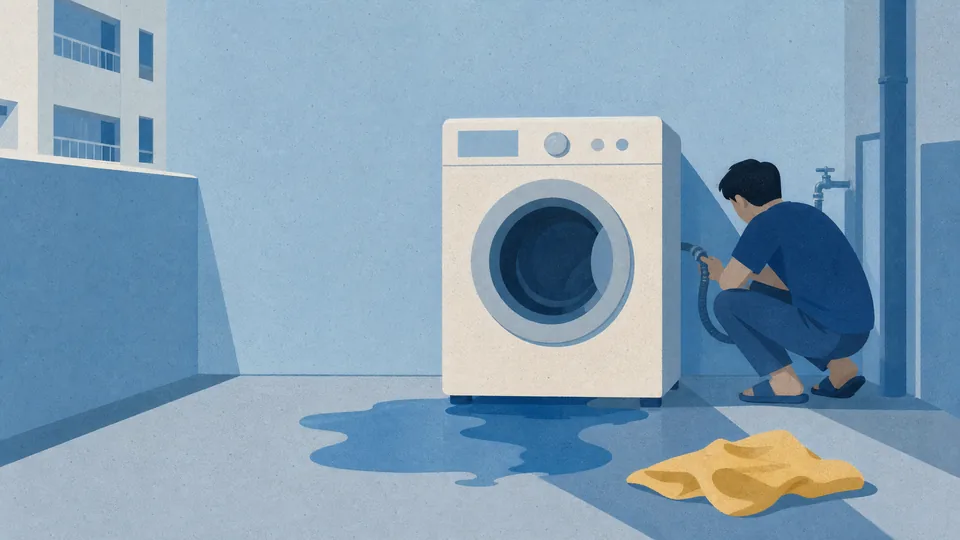
Note the model, approximate age, error code and whether the problem occurs during filling, washing, draining or spinning. Check the manual for user-level troubleshooting. Stop using a leaking or electrically faulty appliance; isolate power only if the plug and access are dry and safe. Do not open internal panels.
Get a diagnosis before deciding
Ask what has failed, how the technician confirmed it and whether another fault may remain. Obtain an itemised price for parts and labour. Confirm the inspection charge if you decline the repair, parts availability and the warranty on the completed work.
An expensive part should not be replaced solely on a guess. A second opinion can be useful if the diagnosis is unclear or the proposed repair approaches the cost of replacement.
Compare the full replacement cost
Include delivery, installation, removal of the old appliance and any plumbing or electrical changes. Check dimensions, door clearance, stacking compatibility and warranty conditions. Energy and water consumption can inform a longer-term comparison, but they do not eliminate the upfront cost.
Consider condition and support
Age alone is not a verdict. A well-supported machine with a straightforward fault may be worth repairing. Repeated failures, unavailable parts or several worn components can change the decision. There is no universal percentage rule that fits every machine and household.
Keep the diagnosis and quote, then decide with the total costs in front of you. Compare appliance-repair providers.