What to check first
Watch the machine through a fill, wash and drain cycle if you can, and note exactly when water appears: as the machine fills, throughout the wash, only during the spin, or constantly even when it's off. That timing narrows the cause more than anything else you can check.
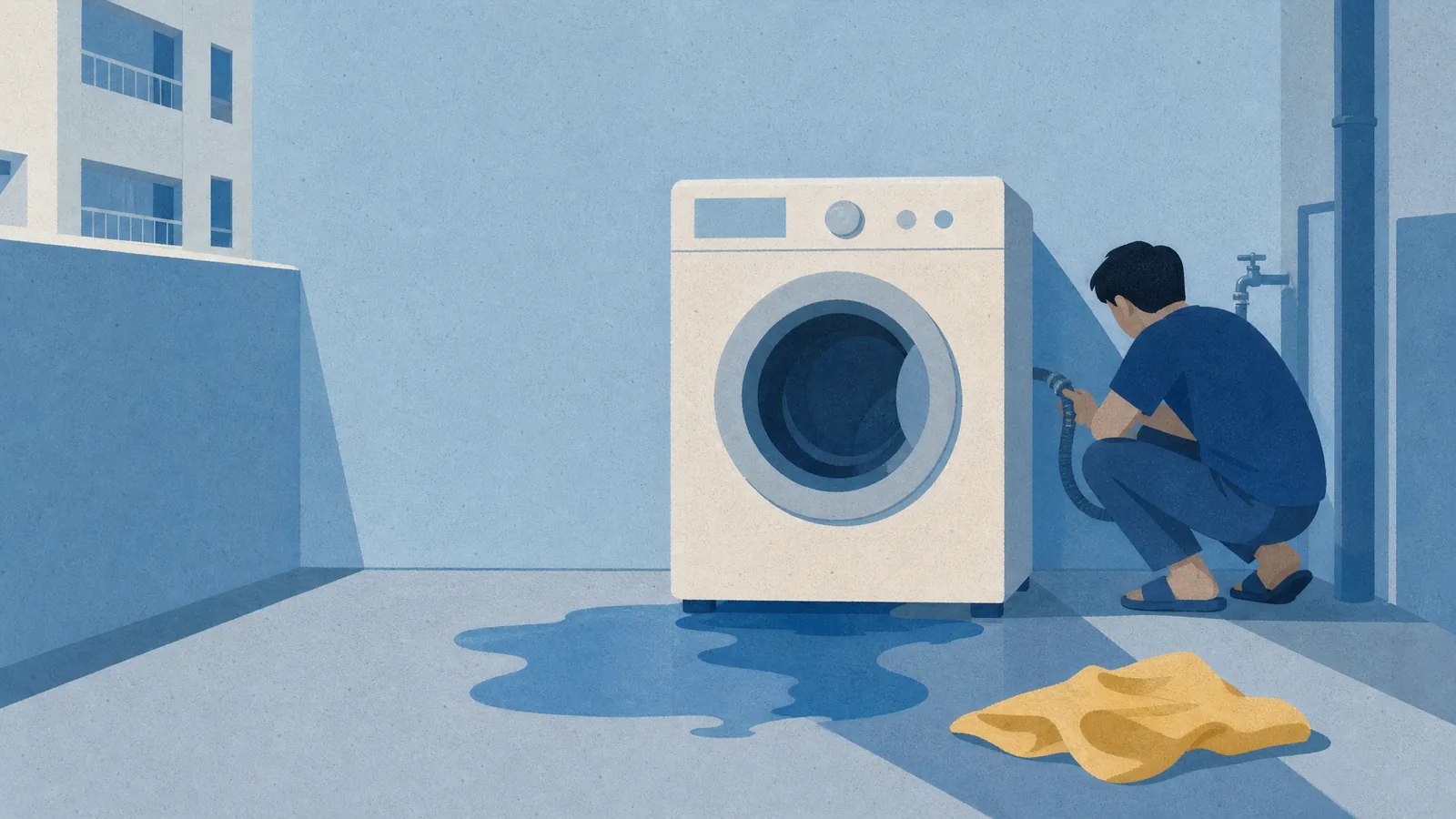
Look at the hose connection where it meets the wall tap and where it meets the back of the machine. A drip at either end, or a hose that feels loose when you tug it gently, is often the whole answer.
Isolate the water supply at the wall tap if the leak is continuous, and unplug the machine if water is anywhere near the power socket. Don't run another cycle "to see" once you've found standing water.
The likely causes, in order
A loose or worn hose connection (most common). The most common source is a loose or worn connection at the wall tap or the machine's inlet hose. Check these fittings first, since PUB names "replacing or removing any tap or mixer" and accessories such as connecting hoses as simple work you may do yourself.
A worn door seal. The second cause is a worn door seal on a front-loading machine, or a foreign object such as a coin or wire caught in it. Water pooling at the very front of the machine during a wash cycle, rather than underneath it, points to the door seal.
A blocked drain hose or sink. The third cause is the drain hose or the sink it empties into. HDB's home care guide covers clearing a choked wash basin or kitchen sink — if that outlet is blocked, water backing up can look like the machine itself is leaking.
When to call, and who
Call an appliance repair provider once you've ruled out the hose connections and the drain outlet and the leak is still there, or if it's clearly coming from inside the machine's cabinet rather than a fitting you can reach. Stop using the machine and isolate the water supply at the wall tap if the leak is continuous rather than only during a wash cycle, or if water is pooling near any power point — do not run another cycle to see if it stops on its own.
What it costs
Ask two or three for a written quote once you've described where and when the water appears — that detail is what separates a five-minute hose fix from an internal repair.
Ask for the inspection or call-out fee, whether it's waived if you proceed, and whether a replacement hose or seal is quoted as a separate parts line rather than folded into a vague "repair" price.
Who to call, and how to judge them
A technician checks the hose connections at the wall and the machine, then the door seal, before opening the machine to look at the internal pump or hose clamps, since those three account for most of the leaks that turn out not to need a repair at all. All regulated water service and sanitary plumbing works must be carried out by Licensed Plumbers, except for simple plumbing works that can be carried out by handymen — and replacing a tap, mixer or connecting hose is on that simple-works list, which covers most washing machine supply leaks.
Frequently asked questions
Do I need a plumber or an appliance repair provider for a leaking washing machine?
All regulated water service and sanitary plumbing works must be carried out by Licensed Plumbers, except for simple plumbing works that can be carried out by handymen — and replacing a tap, mixer or connecting hose is on that simple-works list, which covers most washing machine supply leaks.
How much does it cost to fix a leaking washing machine in Singapore?
It depends on the cause: a loose hose connection costs less than a failed pump or seal. Ask for the call-out fee and a written diagnosis before repair.
Sources
- PUB, "Plumbing Works" (fetched 15 Sep 2026)
- HDB, "Sinks and Wash Basins" home care guide (fetched 15 Sep 2026)
- gov.sg, homepage (fetched 15 Sep 2026), no trade-specific regulator for appliance repair
Compare appliance repair providers and tell each one when the leak happens, where the water appears, and what you've already checked.