What to check first
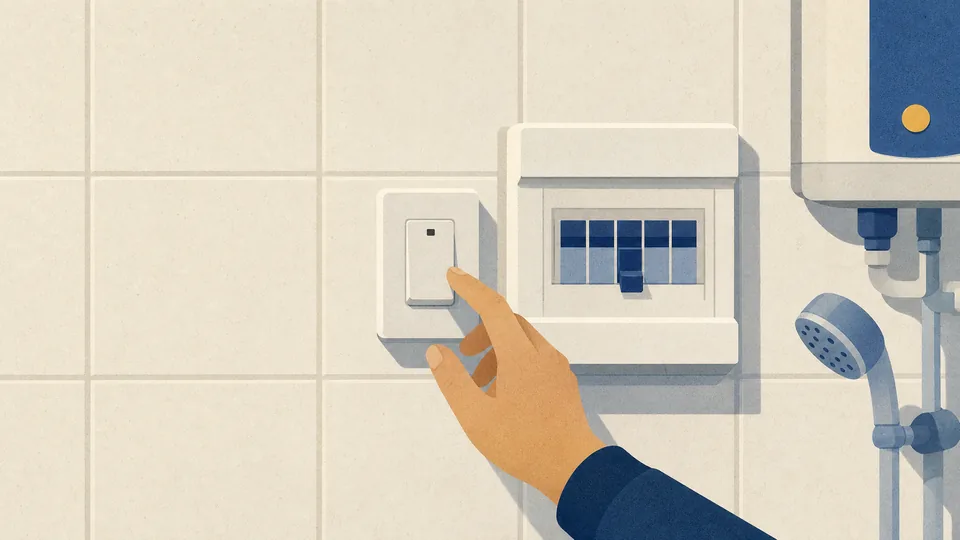
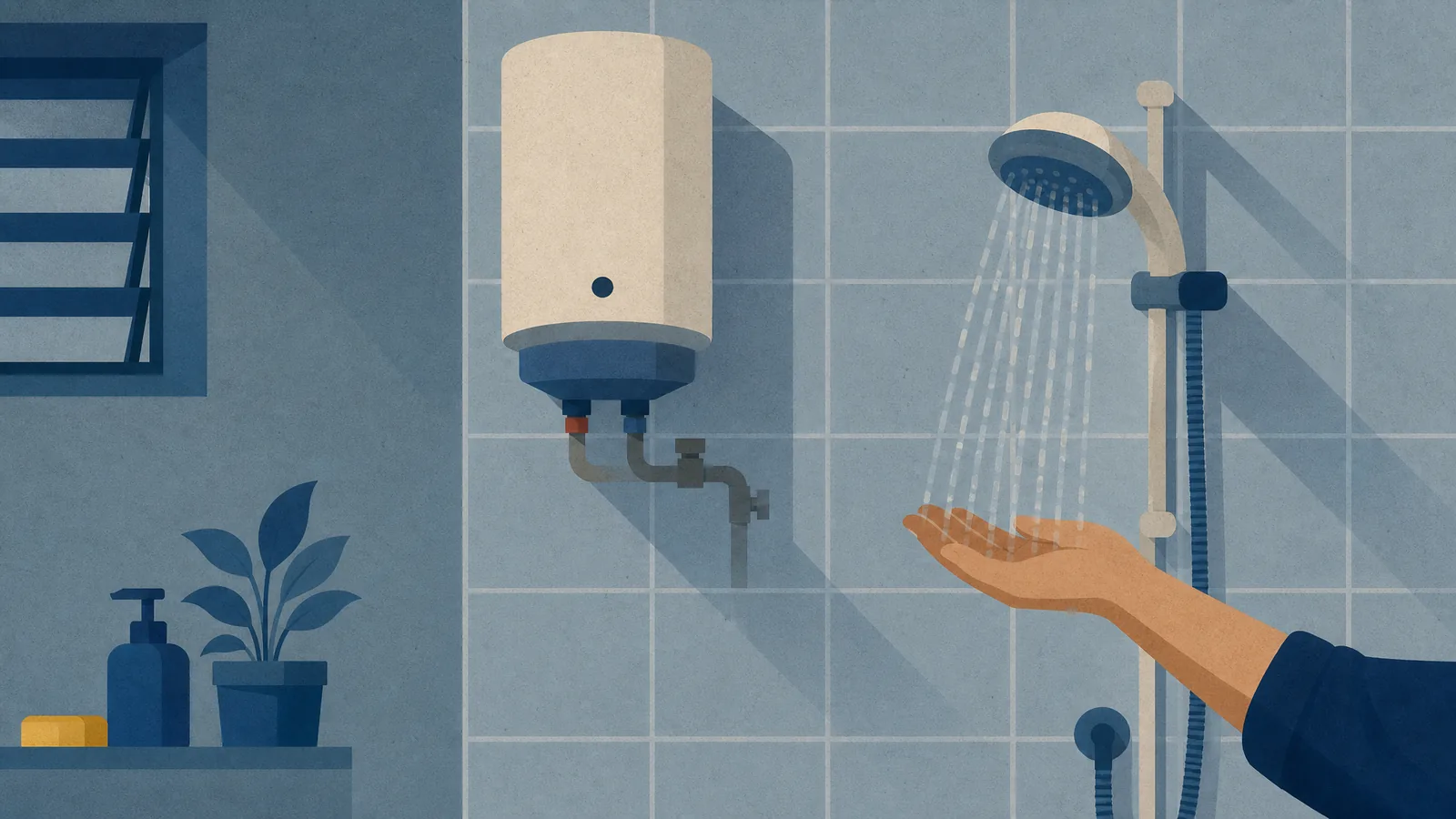
Before booking anyone, check the heater's isolator switch and the circuit breaker it sits on, then run the cold tap alone to confirm water pressure is normal. Those two checks take a minute and tell you whether to call an electrician or a plumber.
If the breaker trips again as soon as you reset it, stop there — that is a repeatable electrical fault, and resetting it a second or third time does not change the outcome.
If cold water pressure at the same outlet is also weak, the fault is not the heater at all; it is upstream in the supply, and that reframes the whole call.
The likely causes, in order
The heater's power or heating element (most common). The heater's own power or heating element is the first thing to check. PUB's licensed-plumber remit covers water service and sanitary plumbing works — the laying, installation, alteration, repair or replacement of water pipes, tanks, taps and fittings — which sits outside the heater's internal wiring and heating element. So a heater that trips the breaker or clicks without heating is a heater or electrical fault, not a plumbing one — the single most common report for "no hot water" and the one most often called in to the wrong trade.
Low or no water pressure (second). Low or no water pressure to the heater is the second cause. If cold water at the same tap is also weak or absent, the fault is upstream in the water supply pipe, which is regulated plumbing work: water service plumbing works refer to the laying, installation, alteration, repair or replacement of water pipes, tanks, taps and fittings.
A worn or disconnected pipe near the heater (third, and often simpler than expected). A worn or disconnected pipe near the heater is the third cause, and it is often simpler than people assume. PUB's own list of simple plumbing works includes replacing or removing any pipe between a stop valve and an instantaneous water heater, work that does not require a PUB Licensed Plumber. Some handymen can do this leg of the job even though the rest of your plumbing might need a licensed one.
When to call, and who
Stop and call an electrician, not a plumber, if the heater trips the breaker repeatedly, smells of burning, or the isolator switch feels warm. That is an electrical fault inside or feeding the unit, and it sits outside a plumber's licensed scope of pipes, tanks, taps and fittings.
Call a plumber when the fault is in the water supply: low pressure at multiple taps, a leaking connection near the heater, or a heater that needs replacing along with its pipework. For water-service or sanitary plumbing work specifically, that plumber needs to be PUB-licensed.
Consider a handyman only for the narrow, named exception: the pipe between the stop valve and the heater itself. Anything beyond that pipe, on the water-service side, falls back into licensed territory.
What it costs
Ask two or three for a written quote instead.
Give each provider the same description: whether it is a diagnosis-only call-out, a heater swap, or a repair of the existing unit, and whether the heater itself (versus just labour) is included in the price. A "no hot water" call-out fee and a full heater replacement are not the same quote.
Ask whether the call-out fee is waived if you proceed, and whether the heater brand and warranty terms are stated before work starts, not after.
Who to call, and how to judge them
For any water-service or sanitary plumbing work, check the plumber's licence rather than taking their word. PUB runs a Find a Licensed Plumber e-Service specifically so homeowners can confirm a plumber's registration before engaging them, and it is a public, free check. An ACRA registration confirms the business exists, not that the individual plumber is PUB-licensed, so check both.
Prefer a plumber who asks whether the fault is electrical or plumbing before quoting a fix, rather than one who quotes a heater swap sight-unseen.
Frequently asked questions
Why does my water heater trip the breaker instead of heating?
PUB's licensed-plumber remit covers water service and sanitary plumbing works — the laying, installation, alteration, repair or replacement of water pipes, tanks, taps and fittings — which sits outside the heater's internal wiring and heating element, so a heater that trips the breaker or clicks without heating is a heater or electrical fault, not a plumbing one.
Do I need a licensed plumber to replace the pipe to my water heater?
A worn or disconnected pipe near the heater is the third cause, and it is often simpler than people assume. PUB's own list of simple plumbing works includes replacing or removing any pipe between a stop valve and an instantaneous water heater, work that does not require a PUB Licensed Plumber.
How do I check if a plumber is actually PUB-licensed?
For any water-service or sanitary plumbing work, check the plumber's licence rather than taking their word. PUB runs a Find a Licensed Plumber e-Service specifically so homeowners can confirm a plumber's registration before engaging them, and it is a public, free check.
Sources
- PUB, "Plumbing Works" (fetched 15 Sep 2026)
- PUB, "Licensed Plumbers" (fetched 15 Sep 2026)
- PUB, "Application for Plumber Licence" (fetched 15 Sep 2026)
Compare plumbers and give each the same three answers: whether the breaker trips, whether cold water pressure is normal, and what part of the job is near the stop valve.