The two options on the same attributes
| Attribute | Do it yourself | NEA-registered operator |
|---|---|---|
| What you are buying | Retail products | Inspection, treatment, verification |
| Price basis | One-off retail spend | Quoted per job after inspection |
| Who does the work | You | Licensed technician, certified worker |
| Method | Treats what you can see | Integrated Pest Management |
| Follow-up | Repeat until it works | Scheduled return visit |
| If it fails | Infestation usually larger | Warranty terms apply |
| Strongest products | Not available to you | Restricted Use pesticides |
| Best case | Early, contained, one species | Breeding, spread, or bed bugs |
Cost, time, method, risk
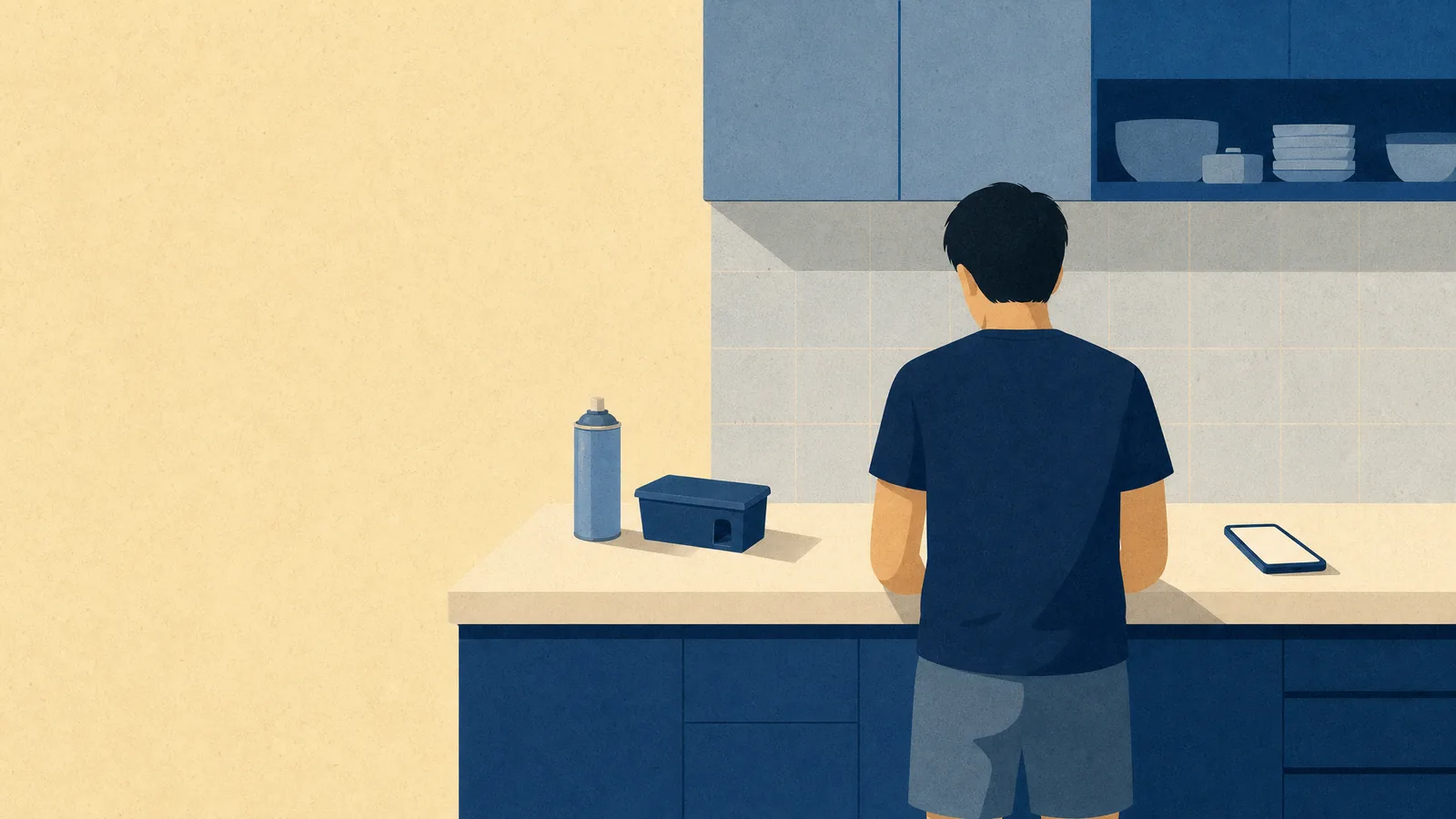
On cost, DIY is a one-off spend on retail products with no return visit. So the honest comparison is not cheap against expensive; it is a known small spend that may not work against an unknown larger spend that is scoped and warranted.
On time, DIY is immediate but open-ended: you repeat it until it works or until you give up. An operator's programme is scheduled, with an interval between visits chosen to catch the next generation rather than the one you can see.
On method, retail products treat what you can see. Singapore Standard SS 721:2025 is built on Integrated Pest Management principles, which combines physical, biological, and chemical controls as appropriate and emphasises eliminating root causes of infestations rather than treating symptoms. That is the real difference between the two columns, and it is not something a stronger spray closes.
On risk, a failed DIY attempt is rarely neutral. Spraying a bed bug harbourage scatters it to adjoining rooms, and repeated retail spraying of cockroaches selects for the survivors, so the job that follows is larger than the one you started with.
Do not buy your way around the licence. NEA states that registered Vector Control Operators shall not sell or supply Restricted Use pesticides or products to non-Vector Control Operators, so the strongest products are not legally available to you for DIY. The gap between the two columns is partly a gap in what you are allowed to hold.
When DIY wins
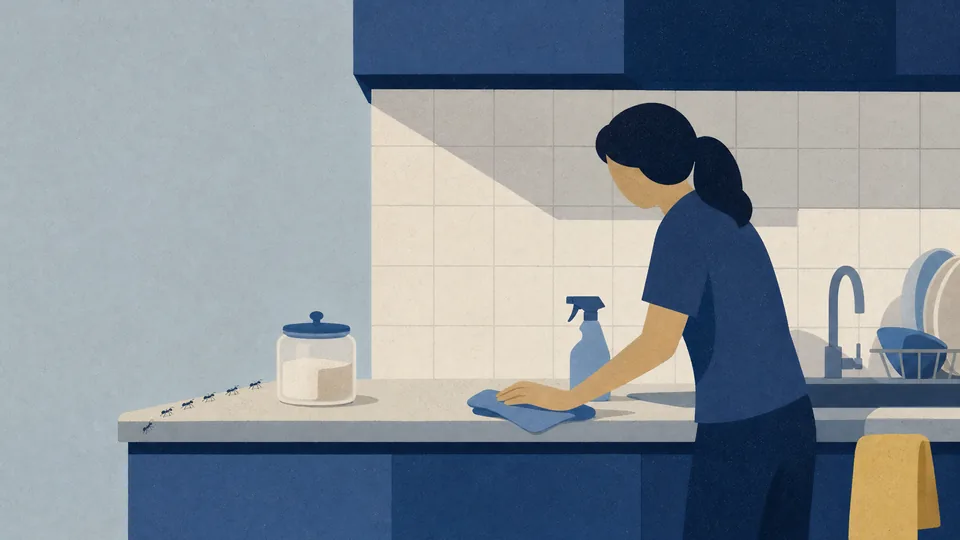
A few sightings of one species, recently, in one room, with an obvious cause you can remove. A single cockroach after a rubbish bag sat out overnight. Ants tracking to one spill. A mosquito problem that is really a standing-water problem.
The free thing to do first, whichever route you take, is the weekly Mozzie Wipeout. NEA advises households to do it at least once a week using the B-L-O-C-K steps, because standing water in a home breeds mosquitoes faster than any treatment clears them. Removing the breeding site is not a lesser version of pest control; for mosquitoes it is the main event.
Clearing food debris, sealing rubbish, fixing a dripping trap under the sink and decluttering a store room are all DIY, all free, and all things an operator will tell you to do anyway.
When to call
NEA draws the line clearly for one pest: premises with bed bug infestation would be advised to engage a pest management company. Bed bugs are the case where DIY is not a cheaper first attempt, it is a delay.
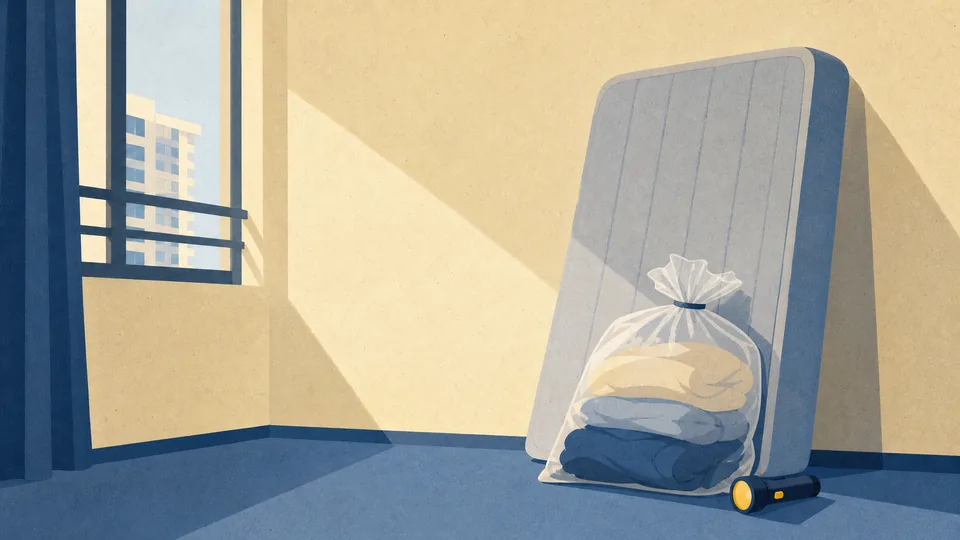
What an operator actually does is not spraying. NEA describes the typical bed bug plan as a combination of non-chemical and chemical methods, such as vacuuming, hot laundering, steam and heat treatment, elimination of harbourages, and the use of insecticides. Reading that list is the fastest way to see why a can of insecticide does not substitute for it.
Call as well when sightings have become daily, when you see them in more than one room, when you find droppings or egg cases rather than individual insects, when the source appears to be shared — a rubbish chute, a shared wall, a neighbouring unit — or when anyone in the home reacts badly to bites or to the products you would otherwise use.
In an HDB flat, a shared source is common and worth raising with the town council as well as with an operator. Treating your unit alone against a chute or a neighbouring infestation is a repeat purchase, not a fix.
Frequently asked questions
Should I try DIY pest control first?
DIY works when the problem is small, recent, visible and one species. Call a registered operator when the pest is breeding out of sight, has spread between rooms, or is a bed bug — the three cases where retail products move the infestation instead of ending it.
Why can't I just buy the same chemicals the professionals use?
Do not buy your way around the licence. NEA states that registered Vector Control Operators shall not sell or supply Restricted Use pesticides or products to non-Vector Control Operators, so the strongest products are not legally available to you for DIY.
Sources
- NEA, "Management of Bed Bugs" (fetched 15 Sep 2026)
- NEA, "Background on Singapore Standard 721:2025" (fetched 15 Sep 2026)
- NEA, "Conditions of Licensing" for Vector Control Operators (fetched 15 Sep 2026)
- NEA, "Stop Dengue Now" (fetched 15 Sep 2026)
Compare pest control providers once the sightings are daily, in more than one room, or bed bugs.