What to check first
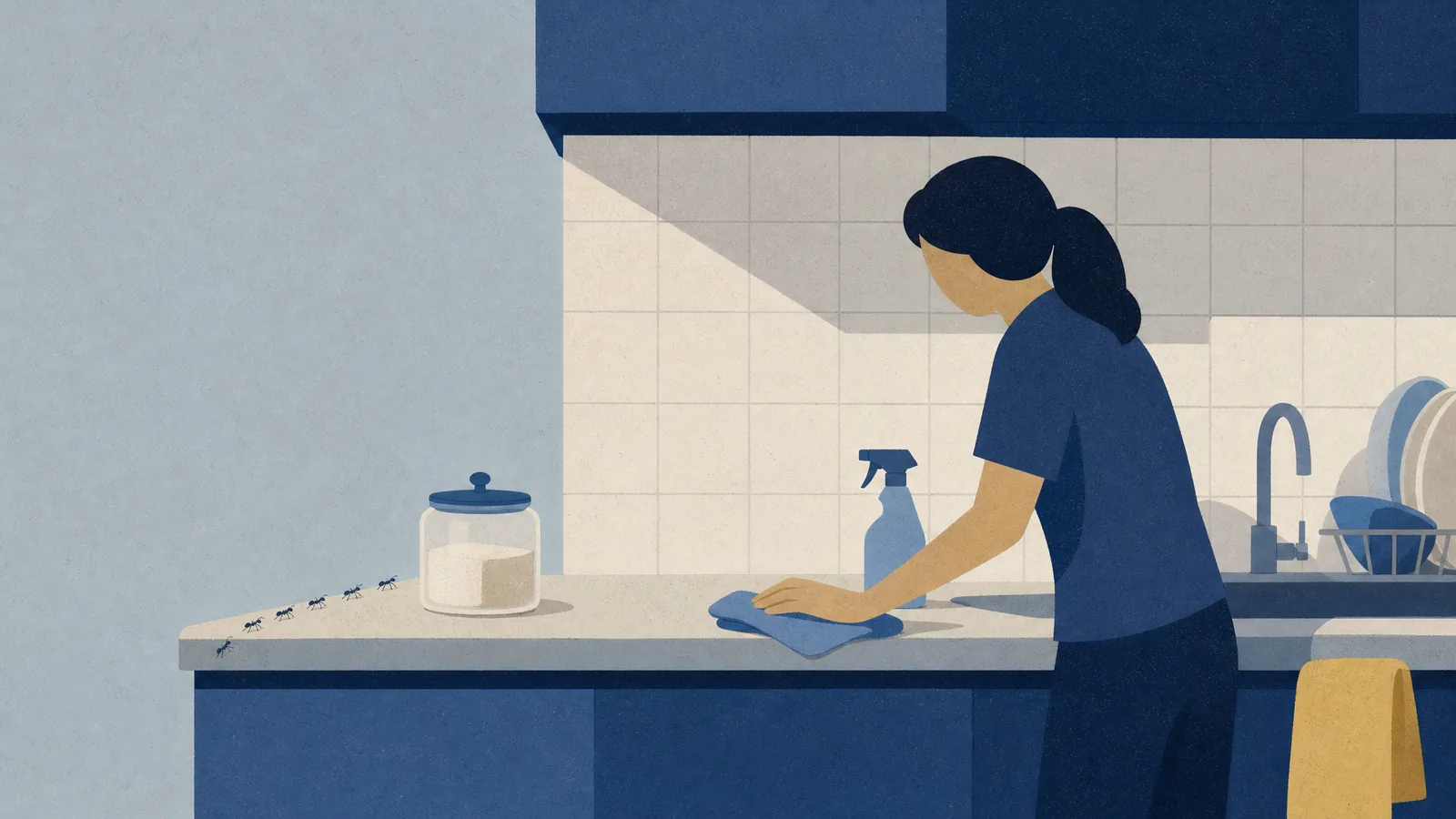
Follow the trail, not the ants. Watch where the line of ants goes — toward a specific spot on the counter, into a gap in the wall, along a pipe — rather than just wiping up the ones you see. The trail's start and end points tell you far more than the ants themselves.
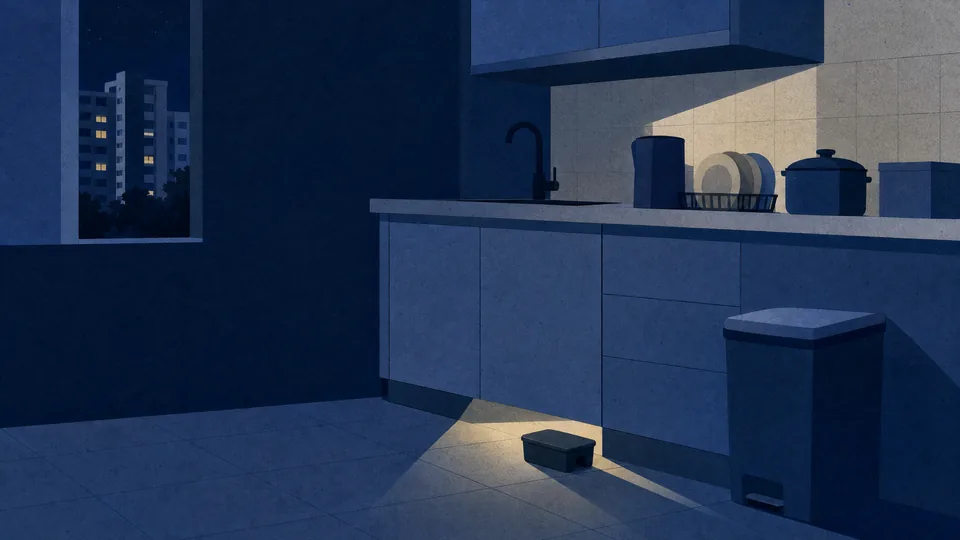
Check the obvious sources first: uncovered food, pet bowls left out, fruit past its best, and any standing water or a damp patch near a pipe or window sill. Ants need both food and moisture, and removing an accessible source often ends a small trail on its own within a day or two.
Note how long the trail has been there and whether it keeps returning after you clean the area. A trail that disappears once the food source is gone is different from one that reappears daily regardless of what you do — the second points to a nest close by, not just foraging.
The likely causes, in order
An accessible food source (most common). The most likely cause is an accessible food source — spills, crumbs, uncovered pet food or ripe fruit — that the colony has found and marked with a scent trail other workers follow. NEA's household pest-prevention advice, written for rats but the same logic applies to ants, is to store food in covered containers and clean up spills promptly. Safe check: clean the area thoroughly, store food in sealed containers, and watch whether the trail stops within a day or two.
A moisture source. The second likely cause is a moisture source, since some common household ant species nest in damp wood or wall cavities near leaking pipes or condensation, not just near food. Safe check: look for damp patches, condensation on pipes, or a slow leak near where the trail starts.
A nest near the home's exterior. The third cause is a nest close to the home's exterior — in soil, potted plants or gaps in brickwork — with the trail simply passing through the kitchen or bathroom rather than nesting inside it. Safe check: trace the trail as far outside as you safely can; if it leads out through a gap under a door or window, the nest is likely outdoors.
When to call, and how urgently
This is rarely an emergency. A small, new trail with an obvious food source can usually be dealt with by removing the source and cleaning the area, and there is no safety reason to rush. Give it a few days after cleaning up before deciding it needs a provider.
Call a pest control provider if the trail keeps returning after you have removed the food and moisture sources you can find, if there are multiple trails in different rooms, or if you cannot find where the trail leads. That pattern points to a nest inside a wall cavity or void that only a proper inspection finds.
What it costs
Ask two or three for a written quote instead.
When you ask, describe what you have already tried: which sources you removed, how long the trail persisted, and whether it is one trail or several. A quote for "ant treatment" with no description of the trail and what has already been ruled out is not comparable to anything.
Ask whether the quote is a one-time treatment or includes a follow-up visit, since a colony that is not fully treated the first time often returns within weeks. A provider who offers only a single visit with no follow-up for a recurring trail is not pricing the job realistically.
Who to call, and how to judge them
Only companies registered with NEA as Vector Control Operators can be engaged to undertake vector control work, and their employees must be licensed as Vector Control Technicians or certified as Vector Control Workers to carry out that work. NEA's Singapore Standard 721:2025 code of practice for pest management services emphasises eliminating root causes of infestations rather than treating symptoms, and promotes low-toxicity alternatives and targeted applications over blanket spraying.
The NEA licence is the one that actually matters for this trade — ask for it directly rather than relying on ACRA alone. What to check before booking: where the trail leads, what food or moisture source is nearby, and how long the trail has been visible — a provider who knows this before arriving treats the source, not just the ants on the counter.
Frequently asked questions
What does an ant infestation actually mean?
An ant infestation means a colony has found a reliable food or moisture source in or near your home and is sending worker ants back to it along a fixed, repeating trail rather than a few ants wandering at random.
Why do the ants keep coming back after I clean up?
The second likely cause is a moisture source, since some common household ant species nest in damp wood or wall cavities near leaking pipes or condensation, not just near food — cleaning up the food alone will not stop a trail caused by a leak.
How do I check if a pest control company is properly licensed?
Only companies registered with NEA as Vector Control Operators can be engaged to undertake vector control work, and their employees must be licensed as Vector Control Technicians or certified as Vector Control Workers to carry out that work.
Sources
- NEA, "Vector Control Operator, Vector Control Technician and Vector Control Worker" (fetched 15 Sep 2026)
- NEA, "Background on Singapore Standard 721:2025" (fetched 15 Sep 2026)
- NEA, "Rat Prevention and Control: General Public" (fetched 15 Sep 2026)
Compare pest control providers and give each the trail's start and end point before you ask for a quote.