What to check first
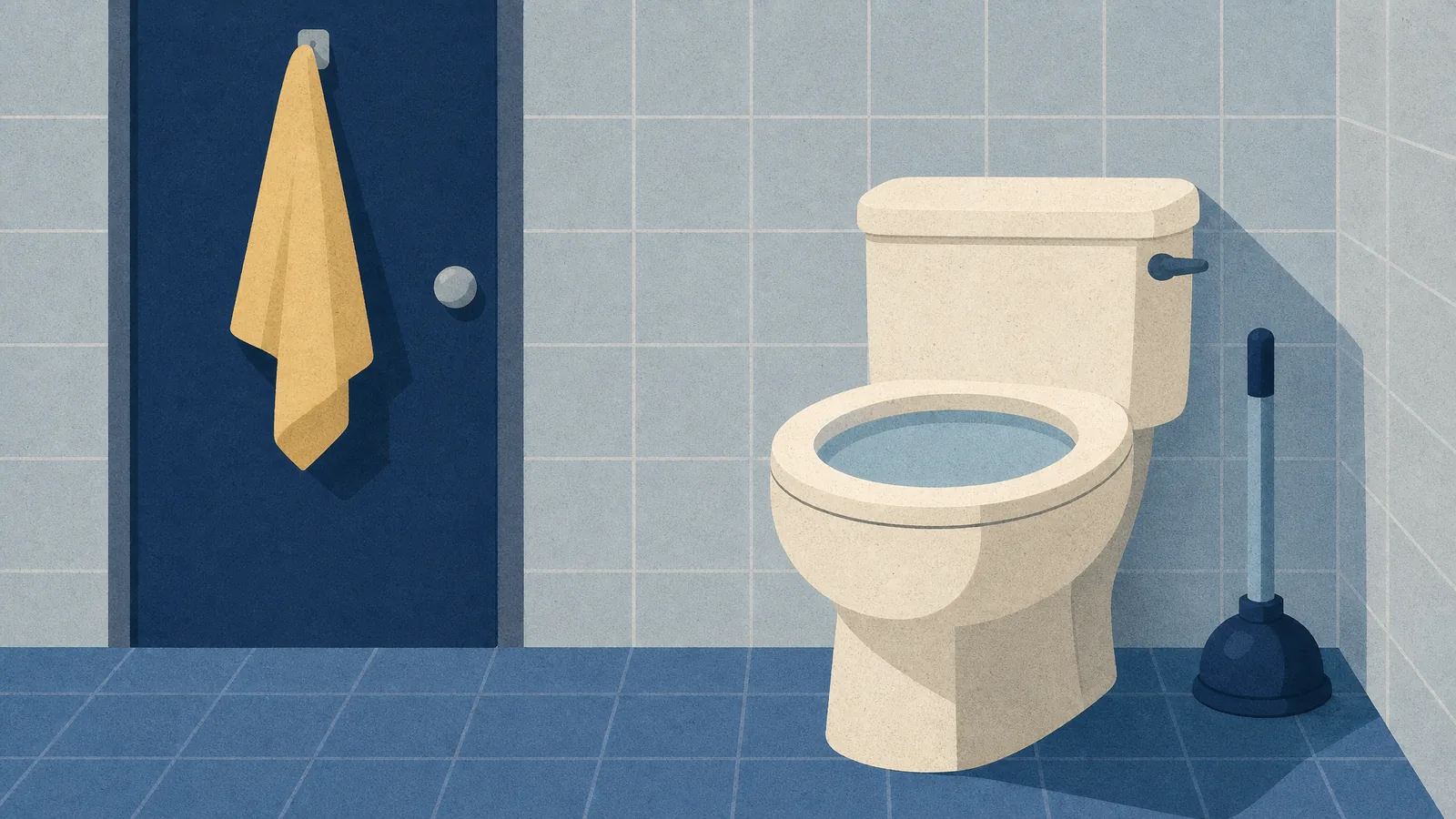
Before you plunge, check the water level in the bowl. If it is already high and close to the rim, wait rather than flush again — a second flush on a full bowl is how a choke turns into an overflow.
A rubber flange plunger, pressed firmly to fully cover the outlet and worked in short strokes, clears most single-fixture chokes in under a minute. If nothing has gone down the toilet except paper, this is almost always enough.
Most Singapore toilets also have a handheld bidet spray mounted beside the bowl. Check that the spray head is clipped back into its holder and isn't dripping or running into the bowl before you decide the choke is only paper — a loose spray hose left trailing into the toilet during a flush is a common local cause that gets missed because it looks like part of the fixture, not the fault.
Do not pour drain-cleaning chemicals into a toilet that is already full of standing water — the splash-back risk is worse than the choke, and it does nothing a plunger won't do faster.
The likely causes, in order
Paper or an object at the trap-way (most common). The most common cause is toilet paper, wipes or a small object caught in the trap-way just inside the bowl. A plunger creates enough pressure to shift this without opening anything, and it is the first thing to try.
A blockage further into the branch pipe. If plunging does not clear it, the blockage has likely moved into the branch pipe behind the toilet. PUB's simple-works list covers "clearing and flushing any discharge pipe, ventilating pipe, drain-line... floor trap, inspection chamber," which is still work you or a handyman may do.
The shared branch or main line. If the toilet keeps backing up after clearing, or another fixture in the flat backs up at the same time, the blockage is in the shared branch or main line. HDB states the Town Council maintains the main sanitary pipes, while residents maintain the branch pipes inside their own flat.
When to call, and who
Stop and call a licensed plumber if water rises toward the rim instead of draining, if the choke returns within a day of clearing it, or if more than one fixture backs up together — plunging harder at that point usually makes it worse. Those signs mean the blockage is past what a plunger or a hand-cleared trap can reach.
If wipes, sanitary items or anything other than paper went down, say so when you call. It changes what tool the plumber brings and how long the job takes.
If you live in a condo rather than an HDB flat, the same split still applies, but the shared portion is your MCST's responsibility rather than the Town Council's — check your condo's house rules or call the management office to report a blockage that affects more than one unit, rather than assuming it is only your own plumber's job.
What it costs
A same-day or after-hours callout for an overflowing toilet often costs more, so ask upfront whether an urgent visit carries a surcharge.
Confirm whether the quote includes clearing the bowl only or also flushing the branch pipe behind it, since a choke that returns the next day is often one the first visit didn't fully clear. Agree upfront that dismantling the toilet or any work beyond a standard plunge and flush needs your approval first, rather than being added to the bill after the fact.
Who to call, and how to judge them
HDB's home care guide for toilets covers simple household repairs such as an overflowing cistern, and advises keeping the water closet in good condition — the same basic checks a plumber runs through before reaching for tools. All regulated water service and sanitary plumbing works must be carried out by Licensed Plumbers, except for simple plumbing works that can be carried out by handymen — and PUB specifically names the water closet in its list of simple works. If the job turns out to need opening concealed pipework, ask for the technician's PUB Licensed Plumber number before they start.
Frequently asked questions
What usually causes a toilet choke in Singapore?
The most common cause is toilet paper, wipes or a small object caught in the trap-way just inside the bowl. A plunger creates enough pressure to shift this without opening anything, and it is the first thing to try.
Do I need to call a plumber for a choked toilet?
All regulated water service and sanitary plumbing works must be carried out by Licensed Plumbers, except for simple plumbing works that can be carried out by handymen — and PUB specifically names the water closet in its list of simple works.
How much does clearing a toilet choke cost in Singapore?
It depends on whether a plunger or a drain snake clears it and whether the visit is after hours. Ask upfront whether an urgent visit carries a surcharge and what the total will be.
Sources
- PUB, "Plumbing Works" (fetched 15 Sep 2026)
- HDB, "Toilets" home care guide (fetched 15 Sep 2026)
- HDB, "Pipes" home care guide (fetched 15 Sep 2026)
Compare plumbers providers and tell each one what went down, whether a plunger helped at all, and whether any other fixture is affected.