Make the area safe
Keep people away from a bulging, cracked or sagging ceiling. If water is near electrical fittings, do not touch them. Isolate the affected circuit only if the distribution board and the route to it are dry and safe to reach. Otherwise keep clear and seek urgent help.
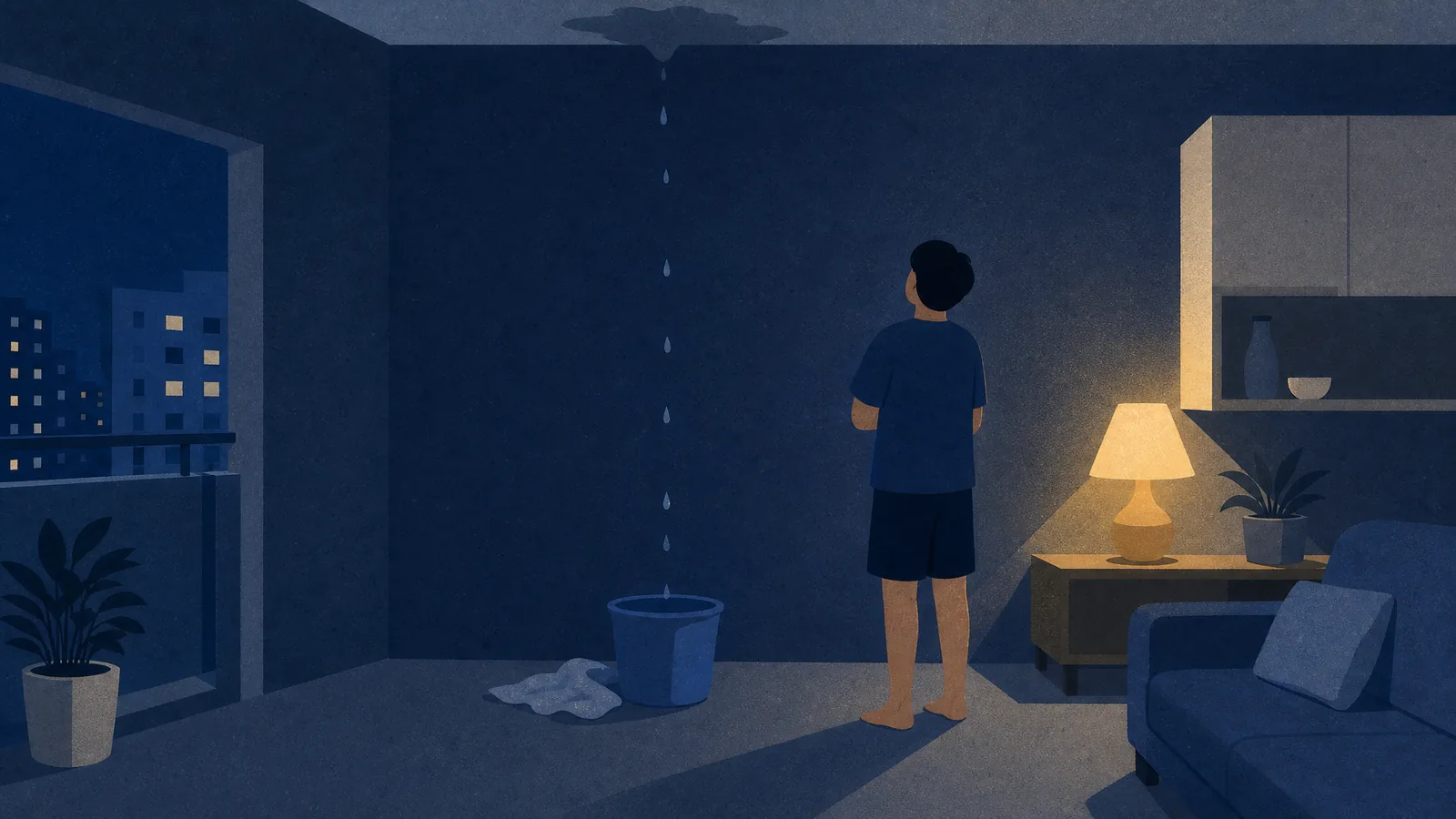
Move belongings only where it is safe. Catch drips without standing beneath damaged plaster, and take photos from a safe position. Do not puncture the ceiling or assume the source from the position of a stain.
Decide who needs to know
In an HDB flat, contact the neighbour above where an inter-floor leak is suspected. For common-property leaks, including the block's roof, contact the Town Council. HDB advises affected owners to arrange a check and repairs together; the source and repair method need to be established first. See HDB's ceiling-leak guidance.
For a condominium, notify the managing agent or MCST if common pipes or building fabric may be involved. If you rent, tell your landlord promptly. A contractor can diagnose the fault; responsibility and payment should be agreed with the relevant parties.
Before booking a night visit
Ask whether the provider can contain the leak that night or only inspect it. Confirm the attendance charge, after-hours surcharge and cost if the source cannot be found. Get approval before work that affects another property or shared services.
Keep a useful record
- When did the leak start, and was it raining?
- Is it continuous or linked to water use upstairs?
- What was inspected, and what source was identified?
- Who will arrange access and approve the repair?
- Does the quote include making good the ceiling after it dries?
Compare plumbers. For a waterproofing or roof problem, ask the inspecting provider which trade should carry out the repair.
If the mark is a stain that has been building slowly rather than an active drip, see water seepage in the ceiling for how to trace the source before booking anyone.