What to check first
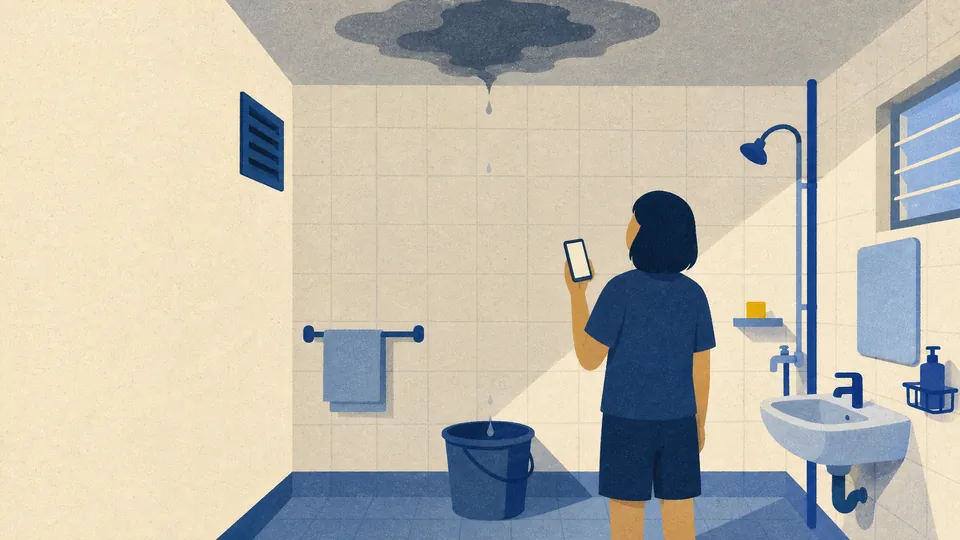
Look at how the stain behaves, not just where it is. A stain that darkens after rain and dries out between showers points to the roof or an external wall. A stain that appears regardless of weather, or that grows steadily, points to a fixture leak from above or a pipe within your own ceiling. Photograph it with a date, because a growing or shrinking stain over a week tells a provider more than a single photo does.
Check whether the mark lines up with a bathroom, kitchen or balcony directly above yours. As a flat owner, you are responsible for the upkeep and maintenance of your flat, and if the unit above is the likely source, that household is responsible for theirs. Speak to them before booking anyone, since the repair belongs on their side of the ceiling, not yours.
Do not puncture the ceiling to find the source yourself, and stay clear if the ceiling looks like it is bulging, sagging or cracked.
The likely causes, in order
A leak from the unit above (most common). The most common cause in a multi-storey home is a leak from the unit above, usually from a bathroom or kitchen whose own waterproofing or plumbing has failed. As a flat owner, you are responsible for the upkeep and maintenance of your own flat, and the same applies to the unit above yours.
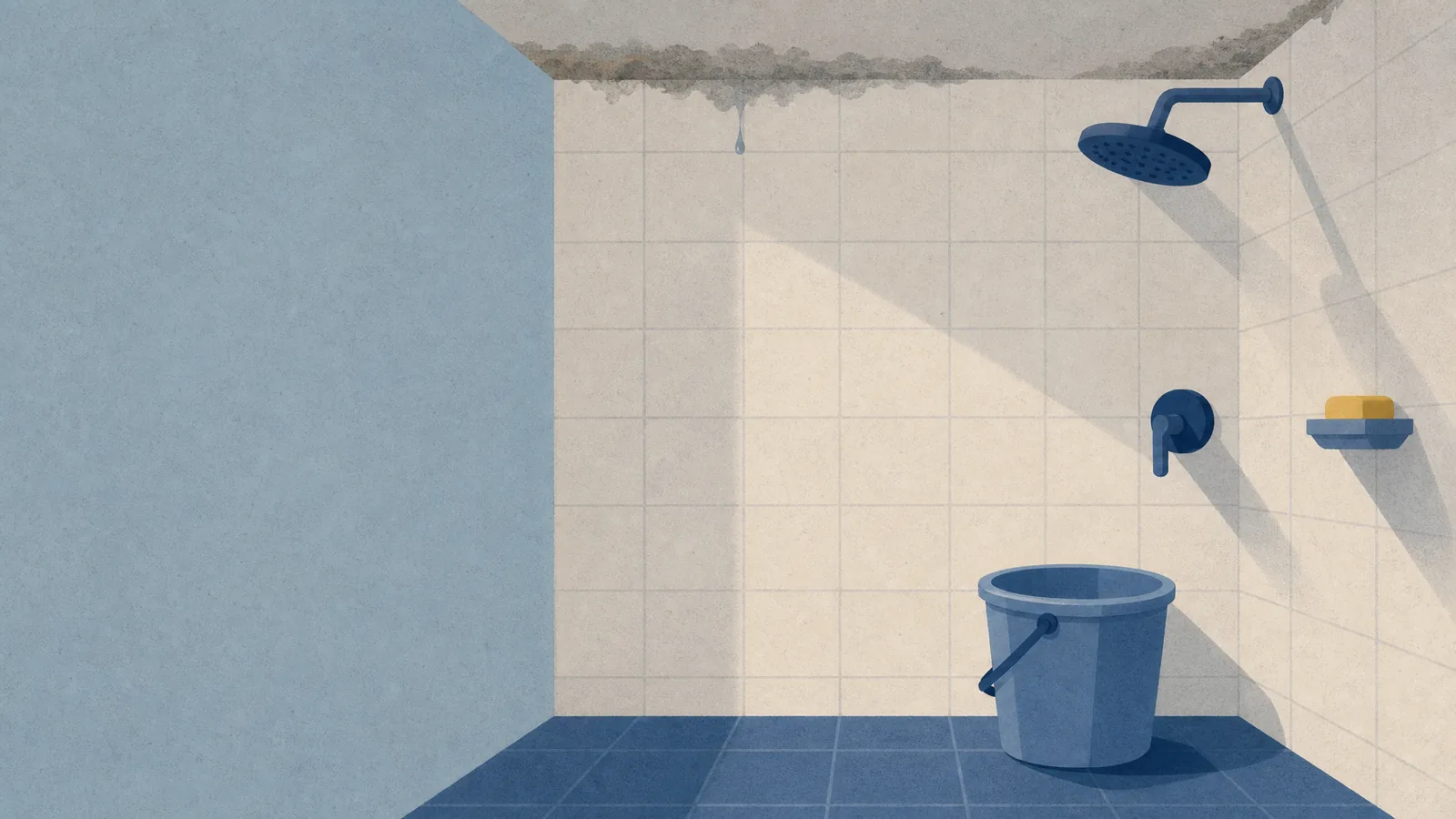
A failed waterproofing membrane. The second cause is a waterproofing membrane that has failed at the slab or roof above, letting rain penetrate rather than a fixture leaking. Waterproofing protects structures against water infiltration which can cause expensive and irreversible damage, and a membrane deteriorates with age rather than failing all at once. This is the cause behind a stain that tracks with rainfall.
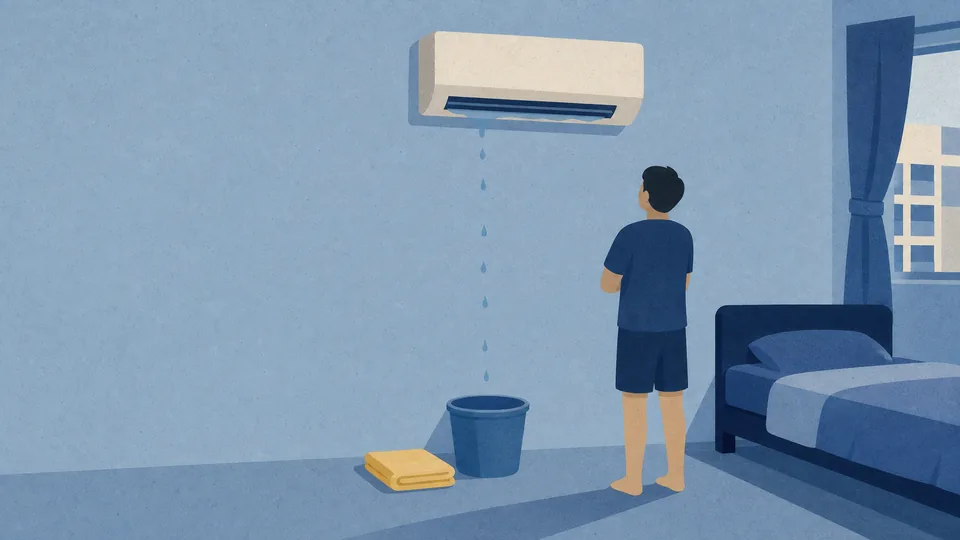
A pipe or condensate line in your own ceiling void. The third and less obvious cause is a pipe or aircon condensate line inside your own ceiling void, which produces a stain that looks identical to seepage from above but is actually a leak within your own flat. HDB states that you need to maintain the sanitary branch pipes in your own flat, and a concealed pipe in the ceiling void falls under that same responsibility. This is the cause a provider checks for when the unit above denies any leak.
When to call, and who
HDB's own wording is the test to apply. As a flat owner, you are responsible for the upkeep and maintenance of your flat. For leaks from common property, contact your Town Council. A waterproofing provider is for a leak confirmed as within your own flat or your own roof, not one that is still a common-property question.
Stop and get help urgently if the ceiling is bulging, sagging or cracked, or if water is near an electrical fitting or light point. Do not touch electrical fittings in a wet ceiling area, and do not puncture the ceiling yourself to find the source.
What it costs
Ask two or three for a written quote instead.
When you ask, give each provider the same facts: which room the stain sits under, whether it tracks with rainfall, whether the unit above has confirmed or denied a leak, and how long the stain has been growing. A quote for "fix ceiling leak" with no scope is not comparable to anything.
Ask whether the price includes tracing the source or only the repair once the source is known, whether a moisture reading is part of the visit, and what happens if the first repair does not hold.
Who to call, and how to judge them
A waterproofing provider traces the source before quoting a repair: whether the stain is active or drying, whether it lines up with a bathroom or kitchen directly above, and whether a moisture reading on the slab points to a membrane failure rather than a fixture. Contractors recommend a repair method based on the severity of the leak and the flat owner's needs.
A BCA-licensed builder is worth asking for once the job is a membrane repair rather than a small patch, since that register exists specifically for structural and waterproofing work.
Frequently asked questions
What is the most likely cause of water seepage in a ceiling?
The most common cause in a multi-storey home is a leak from the unit above, usually from a bathroom or kitchen whose own waterproofing or plumbing has failed. As a flat owner, you are responsible for the upkeep and maintenance of your own flat, and the same applies to the unit above yours.
How do I tell a roof leak from a leak from the unit above?
Look at how the stain behaves, not just where it is. A stain that darkens after rain and dries out between showers points to the roof or an external wall. A stain that appears regardless of weather, or that grows steadily, points to a fixture leak from above or a pipe within your own ceiling.
Sources
- HDB, "Ceiling Leaks" home care guide (fetched 15 Sep 2026)
- Sika Singapore, "Waterproofing" (fetched 15 Sep 2026)
- HDB, "Pipes" home care guide (fetched 15 Sep 2026)
Compare waterproofing providers and give each the same facts: which room the stain sits under, whether it tracks with rainfall, and how long it has been growing.