What to check first
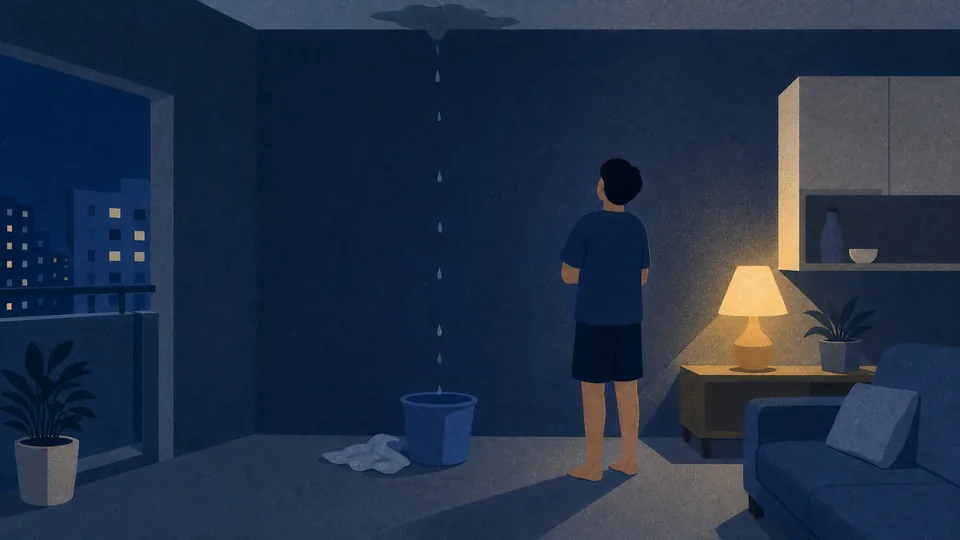
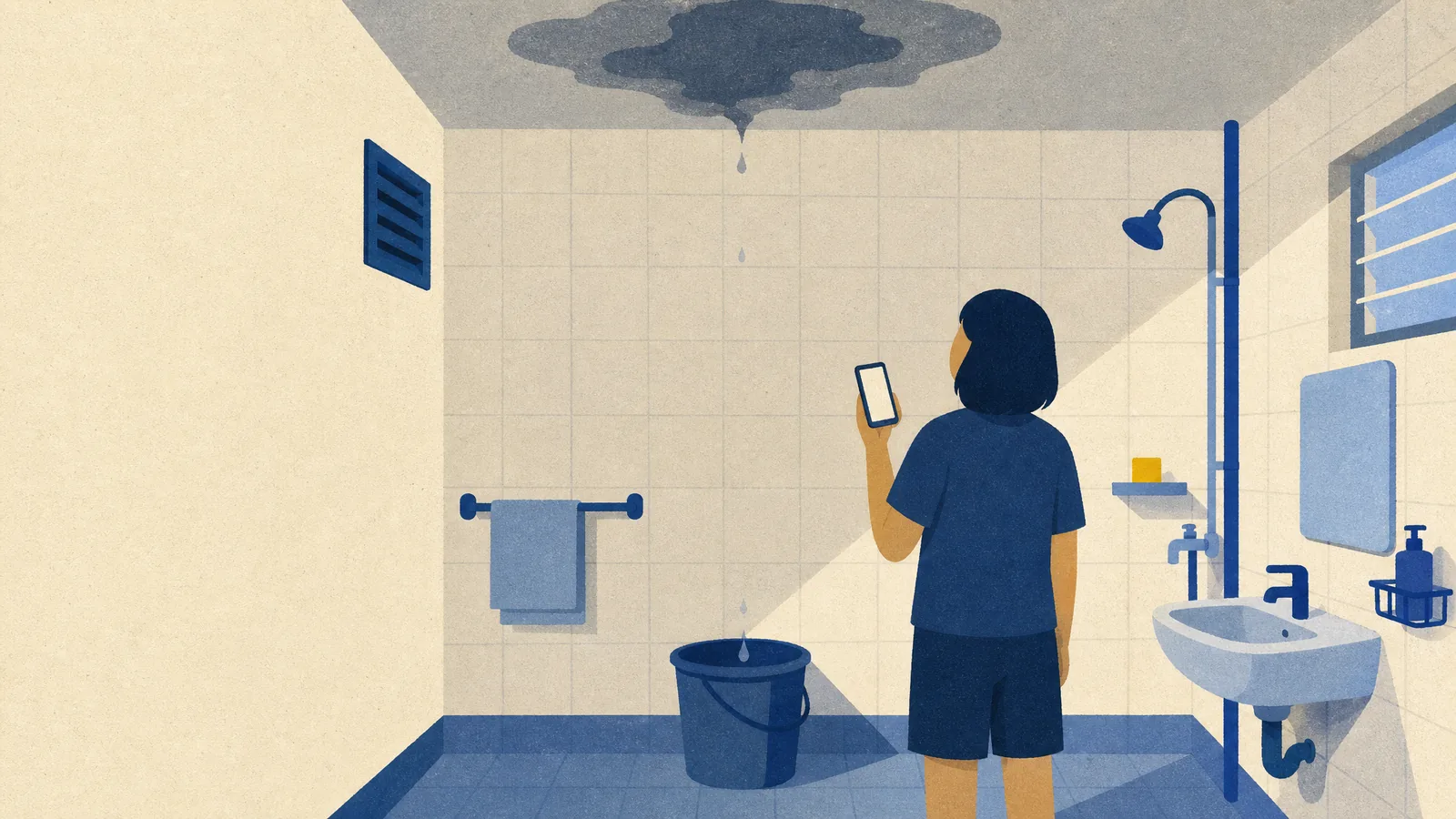
Look at the shape and location of the stain before you call anyone. A patch that sits directly under the bathroom or kitchen of the unit above, and grows after it rains or after someone showers up there, points to a wet-area source. A patch near an external wall that only appears during heavy rain points somewhere else entirely — the building envelope, not a neighbour's floor.
Photograph the stain with a date, and note whether it is damp, actively dripping, or dry between rain. That record is what you hand to your upstairs neighbour, your Town Council or MCST, and any contractor, so the first visit is spent diagnosing, not arguing about whether the leak exists.
Do not paint over the stain or patch the ceiling yourself before the source is found. A fresh coat of paint hides the evidence a contractor needs, and the leak keeps running behind it.
The likely causes, in order
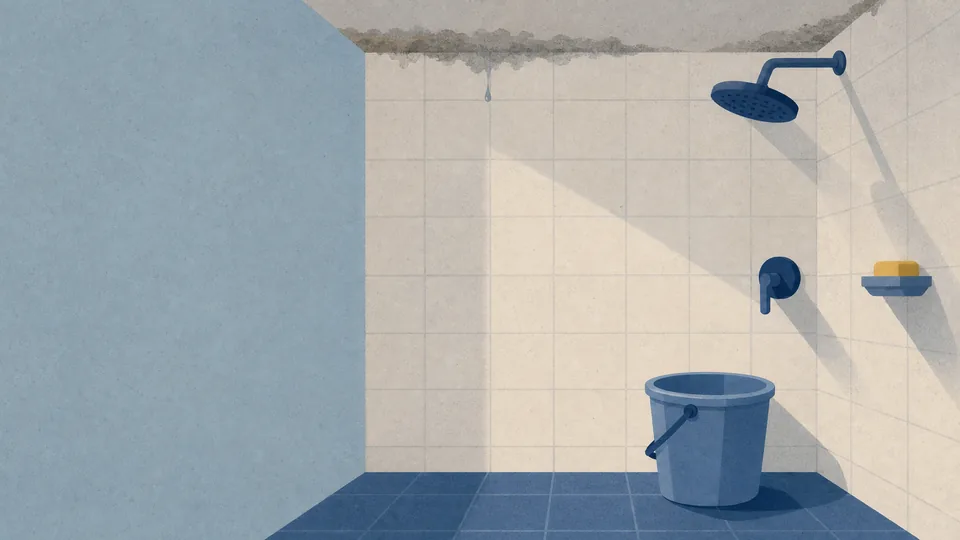
A failed waterproofing membrane upstairs (most common). The most common cause is a failed waterproofing membrane under the floor tiles of the wet area above yours, usually the bathroom. Waterproofing is its own licensed category of building work: BCA's Contractors Registration System groups building work into about 50 types of workheads, grouped under five main registration groups, with waterproofing among them. Membranes have a working life of roughly ten to fifteen years in a wet room used daily; if the unit above has never had its bathroom redone, this is the first thing to rule out.
A choked floor trap upstairs. The second most common cause is a choked or overflowing floor trap in the unit above, which pushes water sideways under the tiles instead of down the drain. That is a maintenance issue in the upstairs unit, not a defect in yours, so the upstairs owner arranges the fix — if they need a contractor, HDB maintains a Directory of Renovation Contractors they can check. Often that is a simple unclogging rather than a full re-waterproofing job.
A leaking pipe upstairs. The third cause is a leaking water or waste pipe inside the wall or floor slab above. A pipe leak is plumbing work, not waterproofing work, and in Singapore that sits with a PUB Licensed Plumber, a separate register from the waterproofing trade. If a plumber upstairs finds no membrane failure and no choke, ask them to pressure-test the pipework before anyone re-tiles.
Your own ceiling or an external wall (less common). If the stain tracks to an outer wall rather than the flat above, or appears only during driving rain, the cause may be the building's exterior — window frame sealant, an external wall crack, or (in a landed home) the roof itself. That is a different job and a different contractor from a unit-to-unit leak.
When to call, and who
Call your upstairs neighbour first, with your dated photos, and ask when they can let a contractor in to check their wet area — the access has to come from their side, not yours. If you live in an HDB flat, your Town Council can arrange or advise on a joint inspection between both units when the neighbour is unresponsive. In a condo, raise it with the MCST or managing agent, since common-area waterproofing (for example a shared external wall) may not be either owner's individual responsibility.
Stop and call your Town Council, MCST or a BCA-registered contractor, not a general handyman, if the ceiling is bulging, sagging or dropping plaster, or if water is pooling fast enough to reach an electrical point. That is a structural or electrical safety question, not a routine waterproofing job.
What it costs
Ask two or three for a written quote once the source is confirmed.
Because the repair usually happens in the unit above, get the quote addressed to whoever is arranging that work — the upstairs owner, or the Town Council for a joint inspection — not to yourself, unless the source is on your side.
Ask what the quote covers: hacking, the membrane, the flood test, and re-tiling are usually separate line items, and a bundled quote is harder to compare.
Who to call, and how to judge them
Waterproofing and general renovation work in Singapore is registered under BCA's Contractors Registration System, which groups building work into about 50 workheads under five main registration groups. Ask which workhead a contractor is registered under before booking wet-area work.
An ACRA registration confirms the business exists, nothing more. Pair it with the BCA workhead check and a written flood-test guarantee.
A waterproofing contractor checks the wet area above yours first, not your ceiling: they look for the failed membrane, hack and re-lay the waterproofing layer, flood-test it, then hand back to a tiler.
Prefer a contractor who asks to see your photos and wants to inspect before quoting, over one who prices a "reseal" sight unseen. A membrane job priced without an inspection is a guess, not a quote.
Frequently asked questions
What does a ceiling leak from the unit above usually mean?
A ceiling leak from the unit above means water is entering your flat through the ceiling or upper wall from the unit directly above, not from your own plumbing or roof.
What's the most likely cause of a ceiling leak from upstairs?
The most common cause is a failed waterproofing membrane under the floor tiles of the wet area above yours, usually the bathroom.
Is a ceiling leak from upstairs a plumbing job or a waterproofing job?
It can be either: a leaking water or waste pipe inside the wall or floor slab above is plumbing work, which in Singapore sits with a PUB Licensed Plumber, while a failed floor membrane is waterproofing work, a separate registered category under BCA.
Sources
- Sika Singapore, "Waterproofing" (fetched 15 Sep 2026)
- BCA, "Contractors Registration System (CRS)" (fetched 15 Sep 2026)
- HDB, "Directory of Renovation Contractors (DRC)" (fetched 15 Sep 2026)
- PUB, "Licensed Plumbers" (fetched 15 Sep 2026)
Compare waterproofing providers and give each the same three answers: where the wet area above sits, what the stain looks like, and whether the upstairs owner has let anyone in yet.