What to check first
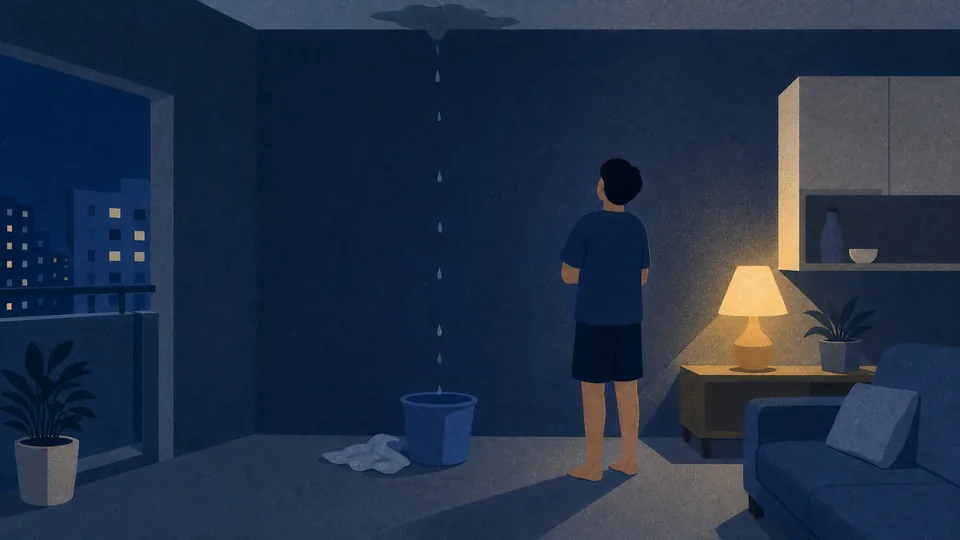
Press the damp area gently. If it feels actively wet or cool, moisture is arriving now, not just left over from an old event, and treating the surface alone will not hold.
Check what is on the other side of the wall: a kitchen, a bathroom, a neighbouring unit's plumbing stack, or the outside of the building. Each points to a different likely cause and a different first call.
Check whether the wall is worse after rain, or worse after a specific tap or appliance is used nearby. Rain-linked dampness points outward, to the building's exterior; usage-linked dampness points to a pipe.
The likely causes, in order
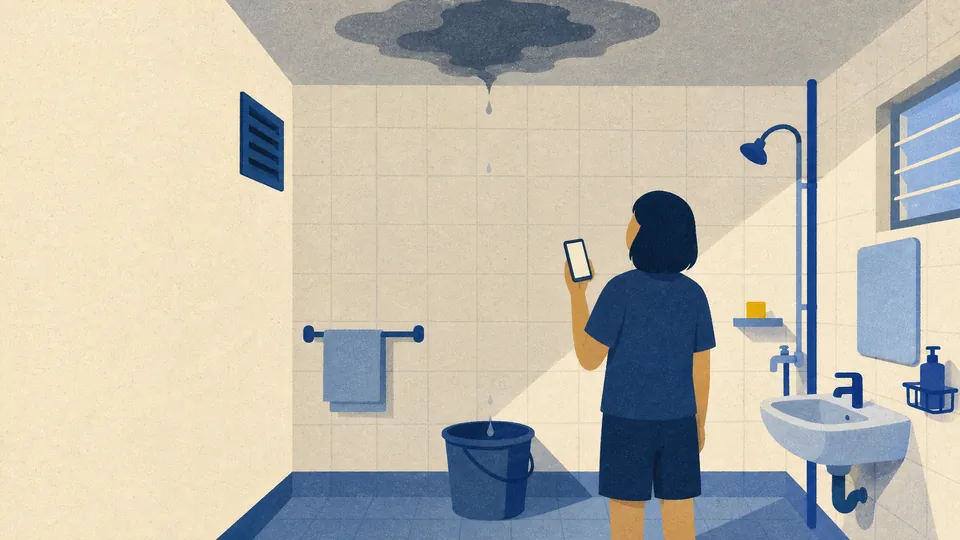
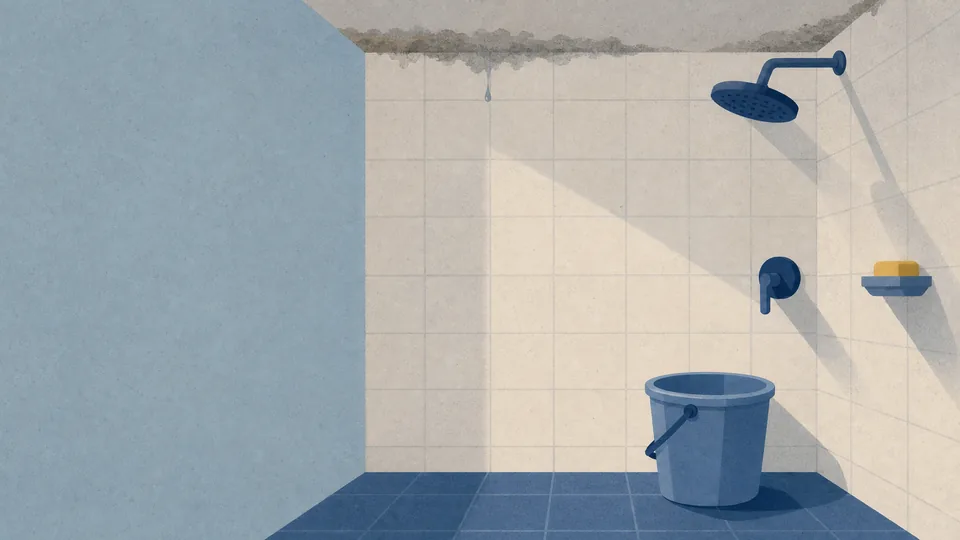
A leaking pipe inside the wall (most common). The most likely cause is a leaking pipe inside the wall or behind a fixture. HDB's guidance on pipes states that the water pipes are part of the water supply system in your flat and it is essential to keep the system in good condition to ensure continuous flow of water, and a slow leak here can dampen a wall for months before it is obviously wet. Safe check: note whether the patch grows or the smell strengthens after using a nearby tap or appliance.
A shared stack outside your flat (second most common). The second cause is a shared sanitary stack or common pipe outside your own flat. HDB states that the Town Council is responsible for the maintenance of the main sanitary pipes, so a damp wall shared with a neighbouring unit's plumbing may need to be reported rather than fixed by a provider you hire yourself. Safe check: ask a neighbour on the same stack whether they have the same patch.
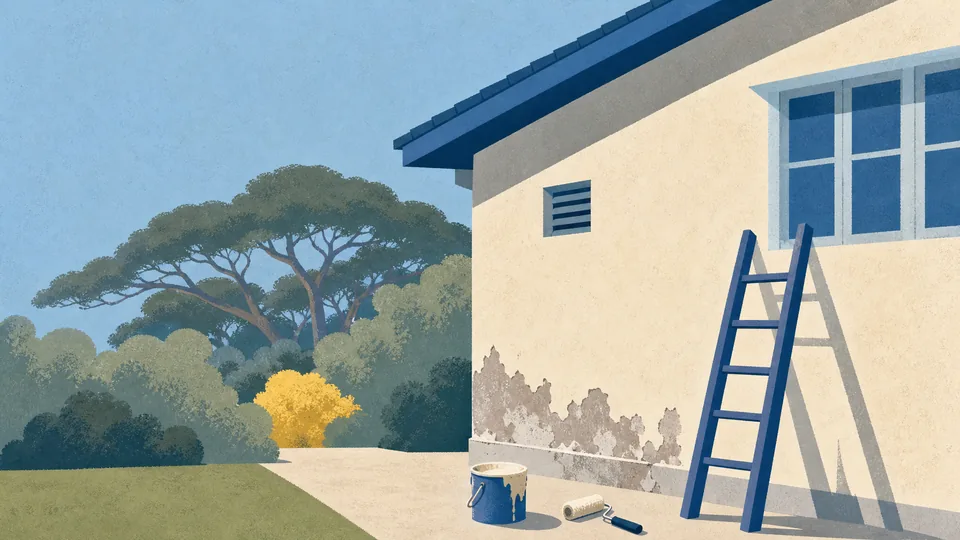
Rain penetration through an external wall (third most common). The third cause is rain penetration through an external wall or crack, more common on exposed or upper-floor units in Singapore's rainy season, where the moisture source is outside the flat entirely rather than in any pipe. Safe check: note whether the patch worsens specifically after heavy rain rather than after using any fixture.
When to call, and who
Call a waterproofing provider once you know, or strongly suspect, where the moisture is coming from. Stop and treat it as a plumbing job first, not a waterproofing job, if the wall is still actively wet, not just stained — waterproofing a wall that is still being fed by an active leak does not hold, since the moisture has nowhere else to go once the surface is sealed.
If the moisture source turns out to be a pipe, PUB's rule applies: all regulated water service and sanitary plumbing works must be carried out by Licensed Plumbers (LPs), except for simple plumbing works that can be carried out by handymen. Altering or repairing concealed pipework sits under PUB's regulated-works line, not the simple-works list.
What it costs
Ask two or three for a written quote that separates the moisture-source fix from the waterproofing itself.
When you ask, describe where the damp patch is, what is behind or above it, whether it feels actively wet, and what you have already ruled out. A quote for "waterproof my wall" with no detail on the source is not comparable across providers, since the underlying cause, not the wall area, usually drives the price.
Ask whether the quote assumes the source has already been fixed, or includes an inspection to find it — the two are very different scopes.
Who to call, and how to judge them
Of the same 253, 114 match a valid ACRA business registration — that confirms the business exists, nothing more.
A waterproofing provider should ask what is on the other side of the wall, whether the dampness is active or a dried stain, and whether a plumber or the Town Council has already been involved, before quoting a treatment that assumes the source is already fixed.
Frequently asked questions
How do I know if a damp wall is a plumbing problem or a waterproofing problem?
A damp wall means moisture is entering the wall on an ongoing basis, showing as a wet patch, peeling paint, a musty smell, or a water stain, and it keeps returning until whatever is feeding it is found and stopped. If the source is a pipe, that is plumbing first, waterproofing second.
My neighbour's wall is damp in the same spot as mine — who fixes that?
The second cause is a shared sanitary stack or common pipe outside your own flat. HDB states that the Town Council is responsible for the maintenance of the main sanitary pipes, so this may need to be reported rather than fixed by a provider you hire yourself.
Can a handyman fix a pipe causing a damp wall?
All regulated water service and sanitary plumbing works must be carried out by Licensed Plumbers (LPs), except for simple plumbing works that can be carried out by handymen. Altering or repairing concealed pipework sits under PUB's regulated-works line, not the simple-works list.
Sources
- HDB, "Fixing Clogged or Leaking Pipes in HDB Flats" home care guide (fetched 15 Sep 2026)
- PUB, "Plumbing Works" (fetched 15 Sep 2026)
- HDB, "Fixing Wall Cracks in HDB Flats" home care guide (fetched 15 Sep 2026)
Compare waterproofing providers and ask each what they believe is behind the wall before they quote.