What to check first
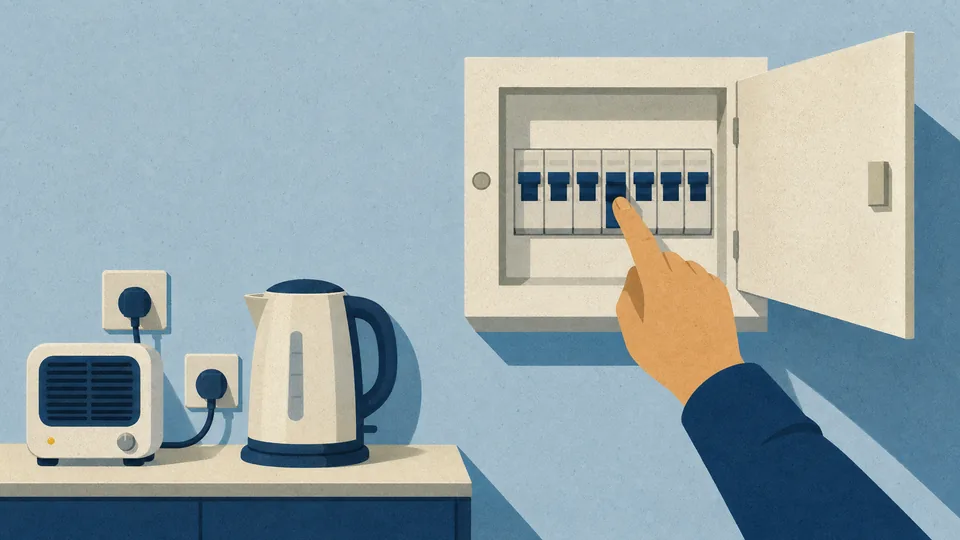
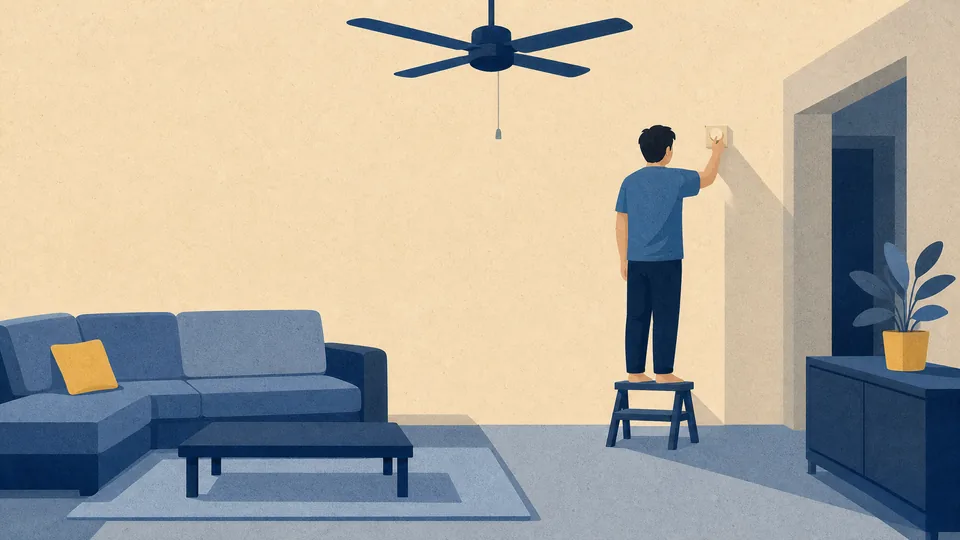
Do this before anything else: if you can safely reach the distribution board, switch off the circuit breaker serving that socket. If an appliance is plugged in and it is safe to touch, unplug it. Do not touch a socket that is warm, discoloured or has any sign of melting.
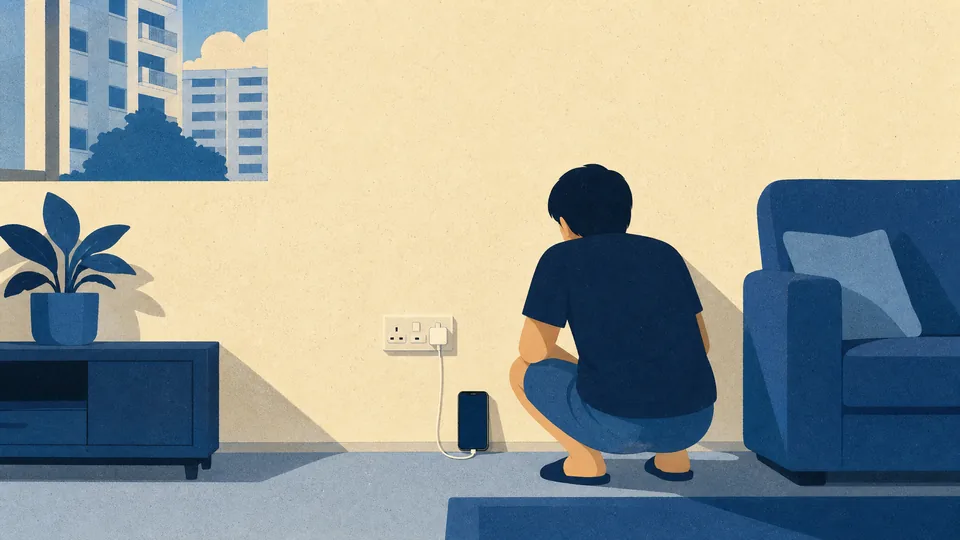
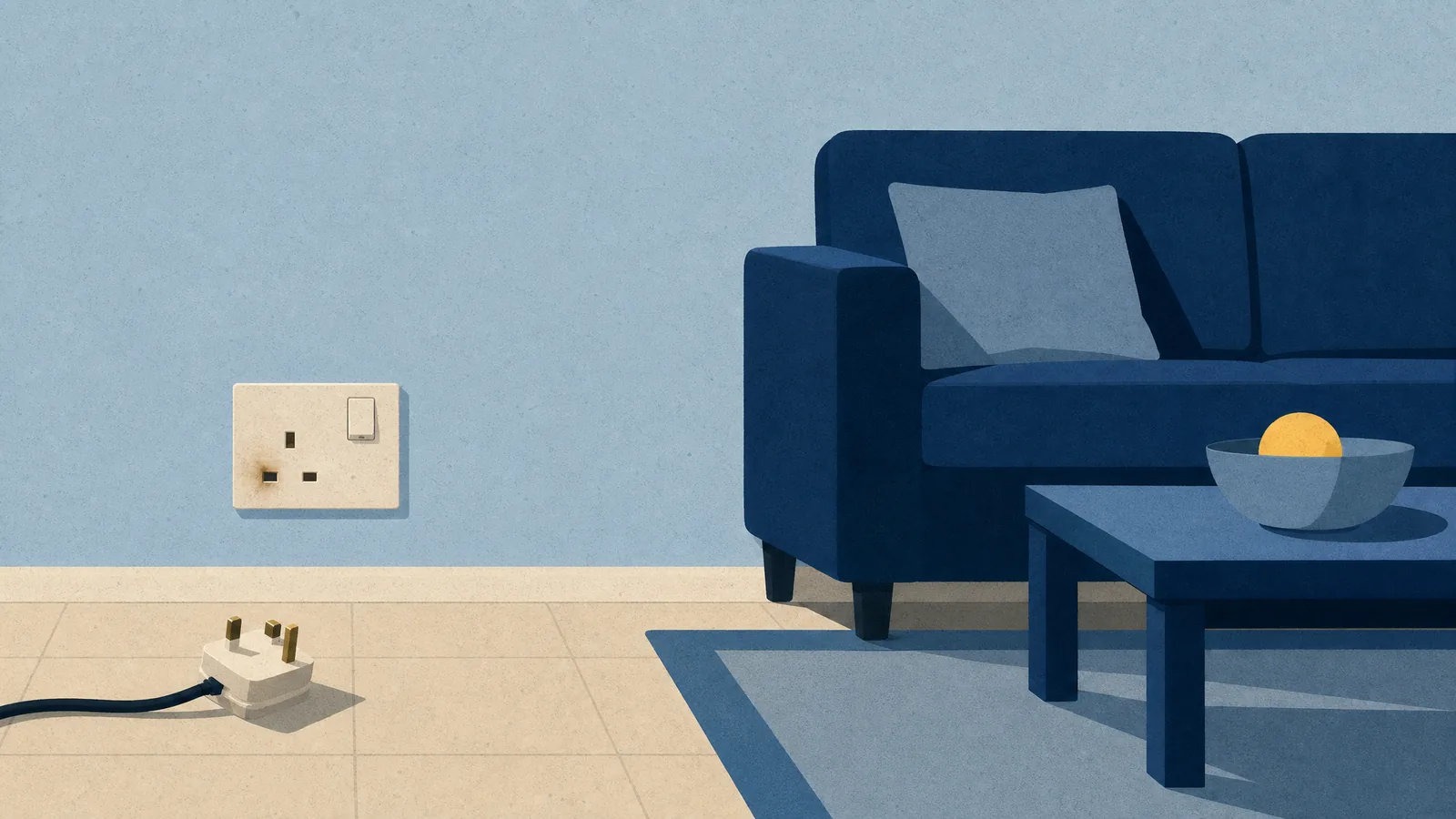
Once the circuit is off and the immediate risk is gone, look at what was plugged in. An old kettle, iron, hairdryer or extension cord with a scorched plug is a different, smaller problem than a smell coming from the wall socket itself with nothing plugged in.
Check whether other sockets on the same extension cord or power strip were carrying multiple appliances at once. In Singapore, aircon units, kettles, irons and water heaters are all high-draw appliances, and stacking several on one multi-plug is a common way to overheat a cord well before the breaker trips.
The likely causes, in order
A single damaged appliance or cable (most common). The most common cause is a single overloaded appliance or a damaged plug and cable, not the socket itself — an old kettle, iron or hairdryer with worn insulation can overheat at the plug pins. Unplugging it and checking whether the smell stops is the fastest way to narrow this down. It needs no tools, just a few minutes.
A loose connection inside the socket or wall. The second cause is a loose connection inside the socket or the wall behind it, often from age or a termination that was never tightened properly, which generates heat at the point of poor contact even under normal load. This is wiring work, restricted in Singapore to a Licensed Electrical Worker (LEW) registered with EMA.
Too many appliances on one socket. The third cause is too many high-draw appliances sharing one socket or extension cord — aircon, kettle, iron and heater on the same multi-plug is a common pattern in Singapore homes, and it overheats the extension cord well before it trips the breaker. Spread high-draw appliances across separate circuits rather than one socket.
Old or degraded wiring behind the wall. In an older flat, insulation on the wiring itself can degrade over decades even without an obvious trigger. If the smell keeps returning at the same socket after you've ruled out the appliance and the load, ask the electrician to check the wiring run, not just the socket face.
When to call, and who
Stop immediately. Switch off the circuit breaker for that socket if you can safely reach the distribution board, unplug what's plugged in if it's safe to touch, and do not touch a socket that is warm, discoloured or smoking. If you see sparks, smoke or an active flame, call 995, not an electrician.
Once it's safe, call a Licensed Electrical Worker to inspect and repair the socket and wiring before you use that circuit again — do not simply plug things back in once the smell has faded, since the underlying fault is still there.
What it costs
Ask two or three for a written quote once the circuit is safely isolated.
Describe what you smelled, when, and whether anything was plugged in, so the electrician arrives with a reasonable idea of what to check first rather than opening every socket in the flat.
Ask whether the quote covers the inspection only, or inspection plus the repair once the cause is found — a burning smell callout often turns into a socket or wiring replacement on the same visit, and it helps to know the likely range for both before they arrive.
Who to call, and how to judge them
Any work inside a socket, switch or the wiring behind a wall point in Singapore is restricted to a Licensed Electrical Worker (LEW) registered with the Energy Market Authority (EMA); ask to see the LEW's registration before they open anything up.
An ACRA registration confirms the business exists, but it is not the same as confirming the individual attending is a registered LEW, so ask for both.
Prefer an electrician who asks what was plugged in and whether the smell has returned before, rather than one who quotes a socket replacement over the phone without asking anything. A Licensed Electrical Worker isolates the affected circuit at the distribution board first, then inspects the socket, its wiring and the termination behind it for scorching, melted plastic or a loose connection, and replaces or rewires whatever is found before restoring power.
Frequently asked questions
What does it mean if a socket smells like burning?
A burning smell from a socket means something inside the wiring, the socket itself, or an appliance plugged into it is overheating enough to scorch insulation or plastic, which is a fire safety issue as much as an electrical fault.
What should I do first if I smell burning from a socket?
Stop immediately. Switch off the circuit breaker for that socket if you can safely reach the distribution board, unplug what's plugged in if it's safe to touch, and do not touch a socket that is warm, discoloured or smoking.
What's the most likely cause of a burning smell from a socket?
The most common cause is a single overloaded appliance or a damaged plug and cable, not the socket itself — an old kettle, iron or hairdryer with worn insulation can overheat at the plug pins.
Sources
- HDB, "Electrical Accessories and Wiring" (home care guide) (fetched 15 Sep 2026)
- EMA, "Electrical Safety" (fetched 15 Sep 2026)
- EMA, "Electricians Licence" (Licensed Electrical Worker) (fetched 15 Sep 2026)
- SCDF homepage (fetched 15 Sep 2026)
Compare electricians providers and give each the same three answers: what was plugged in, whether the socket is still warm, and whether the breaker is off.