What to check first
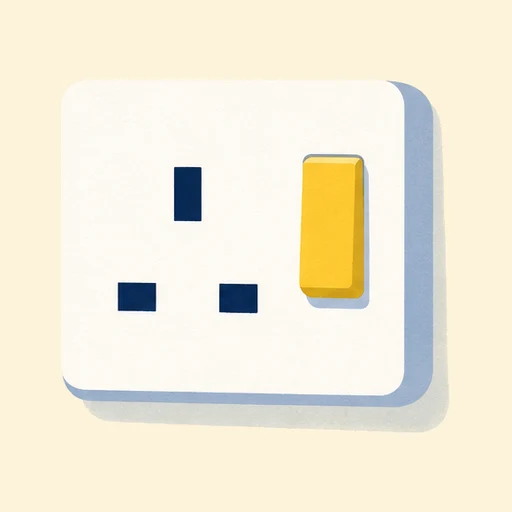
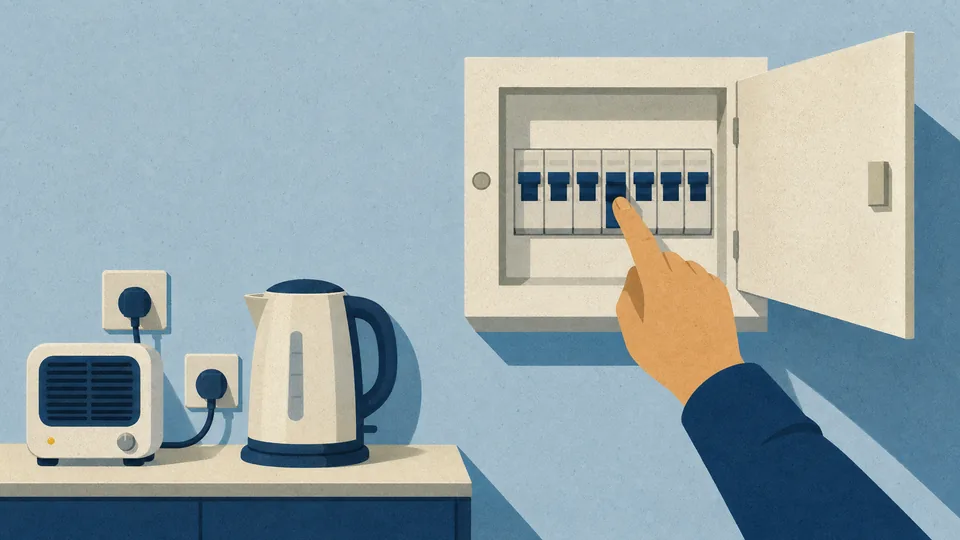
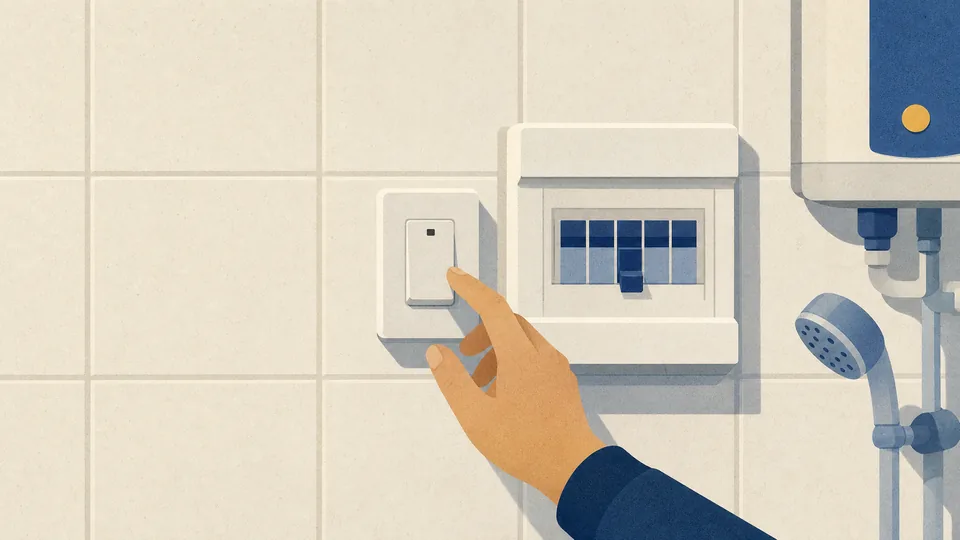
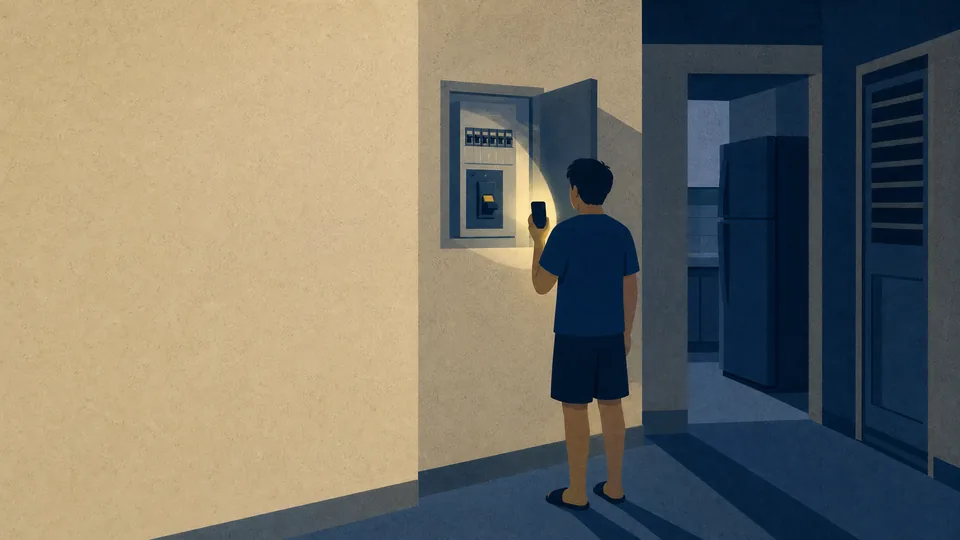
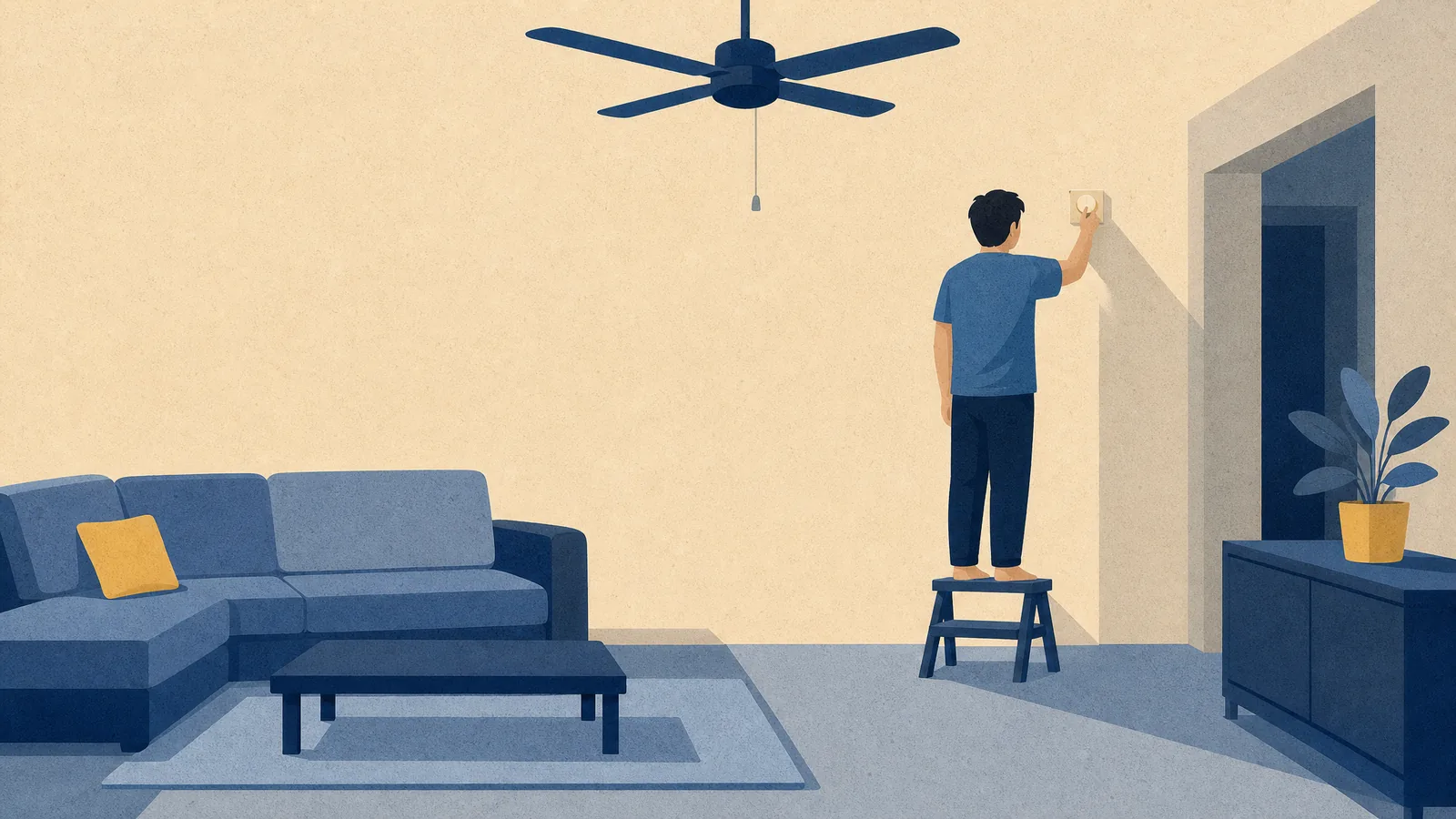
Check the wall switch first, including any dimmer or speed-control switch, and make sure it wasn't left off or on a low setting after a recent power outage. Then check the circuit breaker at the distribution board for that room — a tripped breaker from an unrelated appliance can take the fan down with it.
Listen carefully before touching anything. A fan that hums quietly but the blades don't move is a different fault from a fan that is completely silent and unresponsive — write down which one you have, since it changes the likely cause.
If the fan has a remote control, check or replace the batteries before assuming the fixture itself is faulty. This sounds obvious, but it is the single most common reason a remote-controlled fan "stops working" in a Singapore flat.
The likely causes, in order
No power reaching the fan (most common). The most common cause is no power reaching the fan at all — check the wall switch, then the circuit breaker at the distribution board, before assuming the fan has failed. A tripped breaker or a switch left in an odd position from a recent renovation is a five-minute check that costs nothing.
A failed capacitor. The second cause is a failed capacitor — the fan hums or the motor tries to start but the blades don't turn, or turn only if you give them a push by hand. A capacitor is a small, cheap part and a common point of failure in Singapore's humid, always-on ceiling fan use.
A failed motor or wiring fault. The third cause is a failed motor or a fault in the wiring feeding the ceiling rose, which is less common but means the fixture itself, not just a part, needs replacing. This is wiring work behind the ceiling point, and in Singapore that is restricted to a Licensed Electrical Worker (LEW) registered with EMA.
An old fan at the end of its life. If the fan is well over a decade old, noisy, or has been repaired more than once already, ask the electrician to compare a repair quote honestly against a straightforward replacement, especially since a new fan also resets the warranty clock.
When to call, and who
Call an electrician once you've ruled out the wall switch, the breaker and the remote batteries — those three checks cost nothing and rule out the most common causes without anyone visiting.
Stop and call an electrician rather than a general handyman if the fan makes a burning smell, sparks, or the ceiling point feels warm to the touch — that is the same wiring fault category as a burning socket, not a simple fan repair. It should not wait.
What it costs
Ask two or three for a written quote against the same fault description.
Tell every electrician you ask the same details: whether the fan hums or is silent, how old it is, and whether the switch and breaker have already been checked. That lets them quote a repair, rather than pricing a blind callout.
Ask whether the quote is for a repair (capacitor or wiring fix) or a full fan replacement, and whether removal and disposal of the old fan is included if it needs replacing.
Who to call, and how to judge them
Any wiring work at the ceiling rose or inside a ceiling fan's electrical connection in Singapore is restricted to a Licensed Electrical Worker (LEW) registered with EMA; ask to see the LEW's registration before they open the fixture.
An ACRA registration confirms the business exists, but ask separately whether the technician attending holds the LEW licence.
Prefer an electrician who asks whether the fan hums, is silent, or spins slowly, over one who quotes a flat "fan repair" fee without asking what it's actually doing. An electrician checks power at the switch and ceiling rose first, then the fan's capacitor and motor, working from the cheapest and fastest fix outward, and either repairs the fixture or replaces the whole fan if the motor itself has failed.
Frequently asked questions
Why has my ceiling fan stopped working?
A ceiling fan not working means it does not turn on at all, or turns on (sometimes with a hum) but the blades do not spin, and the two symptoms point to different parts of the fixture.
What should I check before calling an electrician?
Check the wall switch first, including any dimmer or speed-control switch, then check the circuit breaker at the distribution board, and check or replace the remote's batteries if it uses one.
My fan hums but the blades don't spin — what does that mean?
That points to a failed capacitor — the fan hums or the motor tries to start but the blades don't turn, or turn only if you give them a push by hand, and a capacitor is a small, cheap, commonly failing part.
Sources
- Fanco, FAQ page (fetched 15 Sep 2026)
- HDB, "Electrical Accessories and Wiring" home care guide (fetched 15 Sep 2026)
- EMA, "Electricians Licence" (Licensed Electrical Worker) (fetched 15 Sep 2026)
- EMA, "Electrical Safety" (fetched 15 Sep 2026)
Compare electricians providers and give each the same three answers: whether the fan hums or is silent, its age, and whether the switch and breaker are already checked.