
What to check first
Before booking a painter, look at the ceiling in daylight for a brown or yellow stain ring, which points to a leak rather than age, and check whether the flat above or the roof is the likely source. That answer changes who you call first. A painter cannot fix a leak, only cover the mark it leaves behind.
Touch the stained area if it is safe to reach. A dry, flaking patch is old paint failing; a soft or damp patch means the leak is active and repainting now is wasted work.
Check the size of the affected area and whether it has grown since you first noticed it. A stable stain from an old, fixed leak is a different job from a spreading one.
The likely causes, in order
Moisture (most common). Moisture is the most common cause. Nippon Paint's guidance states that if your walls have excess moisture issue, the paint will not be able to adhere to the walls, and the same principle applies overhead: check the moisture content of the ceiling before repainting, not after. Paint applied over a damp surface bubbles and peels regardless of how good the paint is.
Mould (second). Mould is the second cause, and it needs treating, not just painting over. Nippon Paint notes that mould spores can come into your house from the outside through open doorways, open windows or heating and cooling systems with outdoor intakes, and recommends an anti-mould ceiling paint once the mould itself has been treated. A ceiling repainted without treating the mould first will show the same dark patches again within a season, especially in a windowless bathroom or store room.
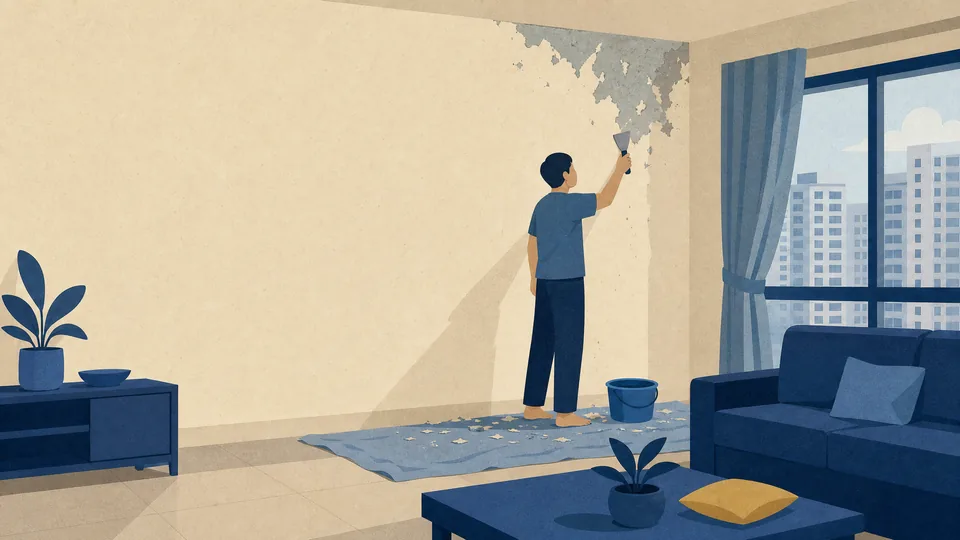
Old paint left in place (third). Old paint left in place is the third cause. Nippon Paint's preparation guidance is direct: you will have to scrap all the old paint away, clean the surface before applying 1 coat of Aqua Primer Sealer Undercoat — skipping that step is why a ceiling repaint can start flaking again within months. A painter who skips scraping to save time on a quote is setting up a repeat job.
When to call, and who
Call a painter once the ceiling is dry and the cause is cosmetic: old paint, general staining, or a mould patch that has already been treated. This is a standard scrape-seal-repaint job.
Stop and contact your Town Council first if the stain is from common property, not a painter. HDB's guidance for flat owners is that for leaks from common property, contact your Town Council — repainting a ceiling over an active leak from outside your flat will stain again. If the leak is from the flat directly above yours, that is between you and your neighbour, and HDB's own guidance treats a flat owner as responsible for the upkeep and maintenance of your own flat, not your neighbour's.
Get the leak stopped and the ceiling fully dry before a painter starts. A painter working around a live leak is painting over the same problem, not solving it. The standard preparation sequence for a ceiling repaint is one coat of sealer followed by two coats of top coat, per Nippon Paint's own application guidance for interior surfaces — a quote that skips the sealer coat is quoting a shorter job than the surface needs.
What it costs
Ask two or three for a written quote instead.
Give each painter the same description: the size of the ceiling area, whether there was a leak and whether it is now stopped, and whether mould treatment is needed before painting. A quote for "repaint ceiling" with no mention of prep work is not comparable to one that includes scraping, sealing and mould treatment.
Ask whether the quote includes the sealer coat and how many top coats, whether furniture protection is included, and what happens if more staining appears once the old paint is scraped off.
Who to call, and how to judge them
Ceiling painting is not licensed work in Singapore, so there is no public register to check. Judge a painter on a written scope, a stated call-out fee and a business you can verify instead. An ACRA registration confirms the business exists, nothing more.
Prefer a painter who asks about the cause of the stain before quoting a repaint. One who quotes a coat of paint over a damp patch sight-unseen is selling a callback, not a fix.
Frequently asked questions
Why does my ceiling paint keep peeling?
Ceiling paint problems in Singapore usually come down to two things: moisture reaching the ceiling from above, or old paint that was never removed before a new coat went on. Check for a leak source before you repaint, because fresh paint over a wet ceiling fails again within weeks.
How do I get rid of mould on my ceiling before repainting?
Mould is the second cause, and it needs treating, not just painting over. Nippon Paint notes that mould spores can come into your house from the outside through open doorways, open windows or heating and cooling systems with outdoor intakes, and recommends an anti-mould ceiling paint once the mould itself has been treated.
Do I need to remove the old paint before repainting my ceiling?
Old paint left in place is the third cause. Nippon Paint's preparation guidance is direct: you will have to scrap all the old paint away, clean the surface before applying 1 coat of Aqua Primer Sealer Undercoat — skipping that step is why a ceiling repaint can start flaking again within months.
Sources
- Nippon Paint Singapore, Support FAQs (fetched 15 Sep 2026)
- Nippon Paint Singapore, Support FAQs (surface preparation) (fetched 15 Sep 2026)
- HDB, "Ceiling Leaks" home care guide (fetched 15 Sep 2026)
Compare painters and give each the same three answers: whether there was a leak, whether it is stopped, and how large the affected area is.