What to check first
Look closely at the crack's width, not just its length. A hairline crack you can barely fit a fingernail into is different from one wide enough to see daylight through, or one where the two sides of the wall are no longer level with each other.
Check the pattern. A fine, web-like network of cracks across a wide area usually points to the paint or the plaster skim. A single, straight or diagonal crack — especially one running from a corner of a door or window frame — is a different pattern and a different conversation.
Note whether the crack has appeared before, been filled and painted over, and reopened. A crack that keeps coming back in the same place, however it was treated, is telling you something a fresh coat of paint will not fix.
The likely causes, in order
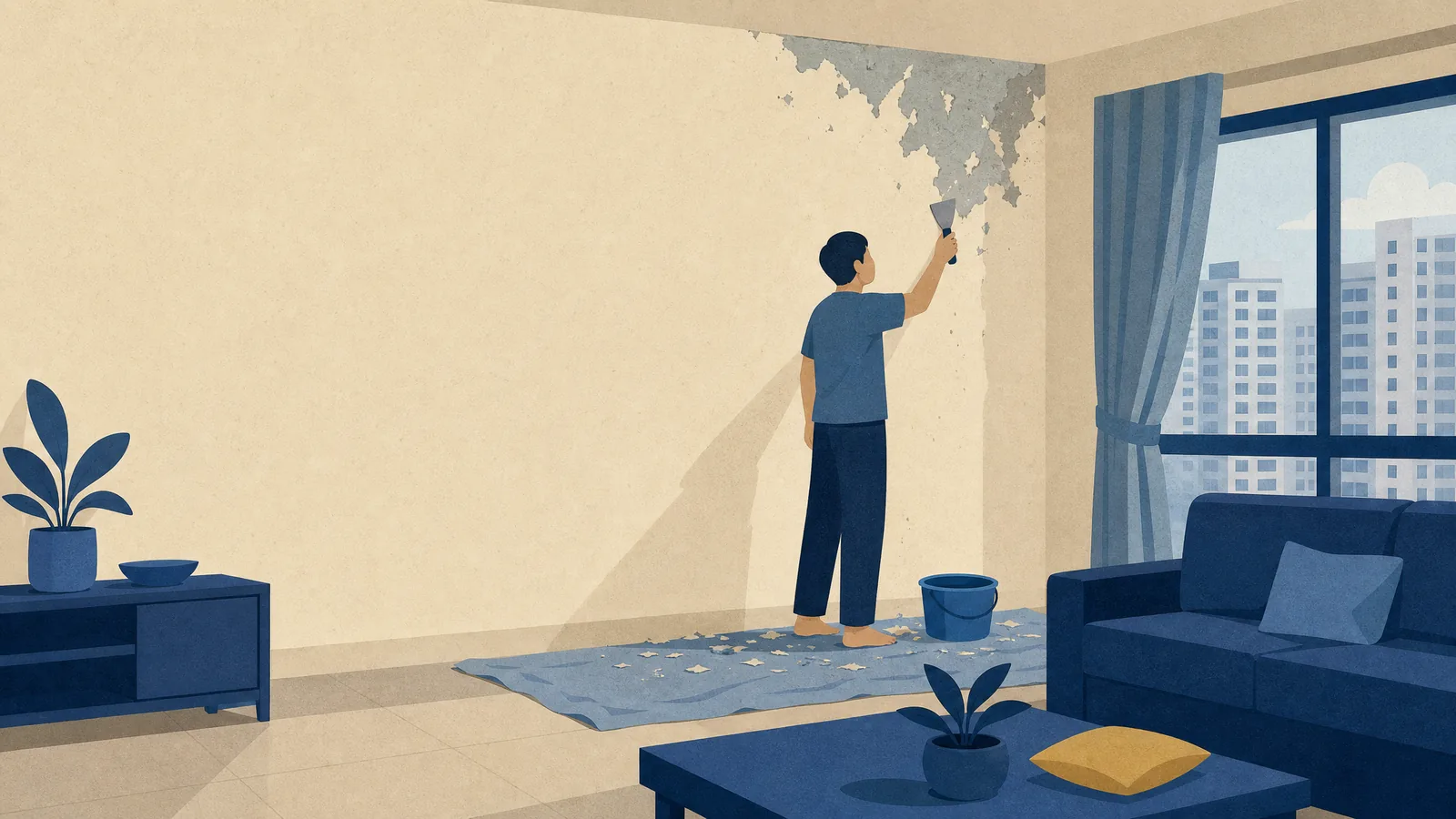
The paint film ageing (most common). The most likely cause is the paint film ageing and losing flexibility over years, especially where an older coat was applied too thickly or over a surface that was not properly prepared, producing fine hairline cracks across a wide area. Nippon Paint's own guidance says hairline cracks are something not many walls or ceilings can usually escape. Safe check: look for cracking spread evenly across a wall rather than concentrated at one point.
A thin plaster skim shrinking. The second likely cause is a thin plaster skim beneath the paint shrinking slightly as it cures or as humidity changes through the year, producing a fine, web-like pattern of cracks rather than one wide line. Safe check: note whether the cracking appeared soon after a renovation or new plaster work, which points more strongly to this cause.
Movement in the wall itself. The third and most serious cause is movement in the wall itself — settling, a structural crack, or spalling concrete beneath the surface — shown by a crack that is wide, stepped, diagonal, or that keeps reopening after being painted over. This is a BCA-level question, not a painting one. Safe check: measure the crack's width if you can do so safely, and note whether it is growing over weeks or months.
When to call, and how urgently
Stop and get a structural opinion, not a paint quote, if a crack is wider than a hairline, runs diagonally or in a stepped pattern, or keeps reopening after being filled and painted over. Painting over a structural crack hides a problem rather than fixing it.
For a fine, widespread hairline pattern with no other signs, there is no urgency — this can wait until you are ready to repaint the room or the flat generally. For anything wider, diagonal, or recurring, do not wait for the next repaint cycle; get it looked at.
What it costs
Ask two or three for a written quote instead.
When you ask, describe the crack pattern and width, how many walls or rooms are affected, and whether it has reopened after previous work. Ask whether the quote includes scraping back and filling the cracks before painting, or assumes a clean surface — these are very different jobs priced very differently.
Ask what happens if the cracks reopen after painting: is there a warranty period, and does it cover a return visit or just the paint itself.
Who to call, and how to judge them
There is no public licensing register for painters in Singapore, so a homeowner's own check is limited to business registration rather than a trade licence. BCA is Singapore's authority for structural building condition where a crack is more than cosmetic. If you are unsure, get that opinion before booking a painter at all.
An ACRA registration confirms the business exists, nothing more. Prefer a painter who asks about the crack's width and history before quoting, over one who quotes a flat "crack repair" line item without looking at photos first. What to check before booking: the width of the crack, whether it follows a straight, diagonal or stepped line, whether it has reopened after previous painting, and whether it affects one wall or several rooms in the same pattern.
Frequently asked questions
Is cracked wall paint always a serious problem?
Wall paint cracking is almost always a surface issue in the paint film or the plaster skim beneath it, not the wall's structure — but the width and pattern of the crack are what actually tell the two apart, not how the wall looks from across the room.
What kind of crack should worry me?
The third and most serious cause is movement in the wall itself — settling, a structural crack, or spalling concrete beneath the surface — shown by a crack that is wide, stepped, diagonal, or that keeps reopening after being painted over. This is a BCA-level question, not a painting one.
Sources
- Nippon Paint Singapore, "Support FAQs" (hairline cracks) (fetched 15 Sep 2026)
- HDB, "Fixing Wall Cracks in HDB Flats" (fetched 15 Sep 2026, confirmed live under that exact title)
- BCA (fetched 15 Sep 2026, confirmed live regulator homepage)
Compare painters and share a close-up photo of the crack with each one before asking for a quote.