What to check first
Note how the fault started. A gradual loss of cooling over days or weeks, especially with ice on the pipes or connections, points to a leak. A sudden stop with no ice, or the outdoor unit going silent, points somewhere else — most often the compressor.
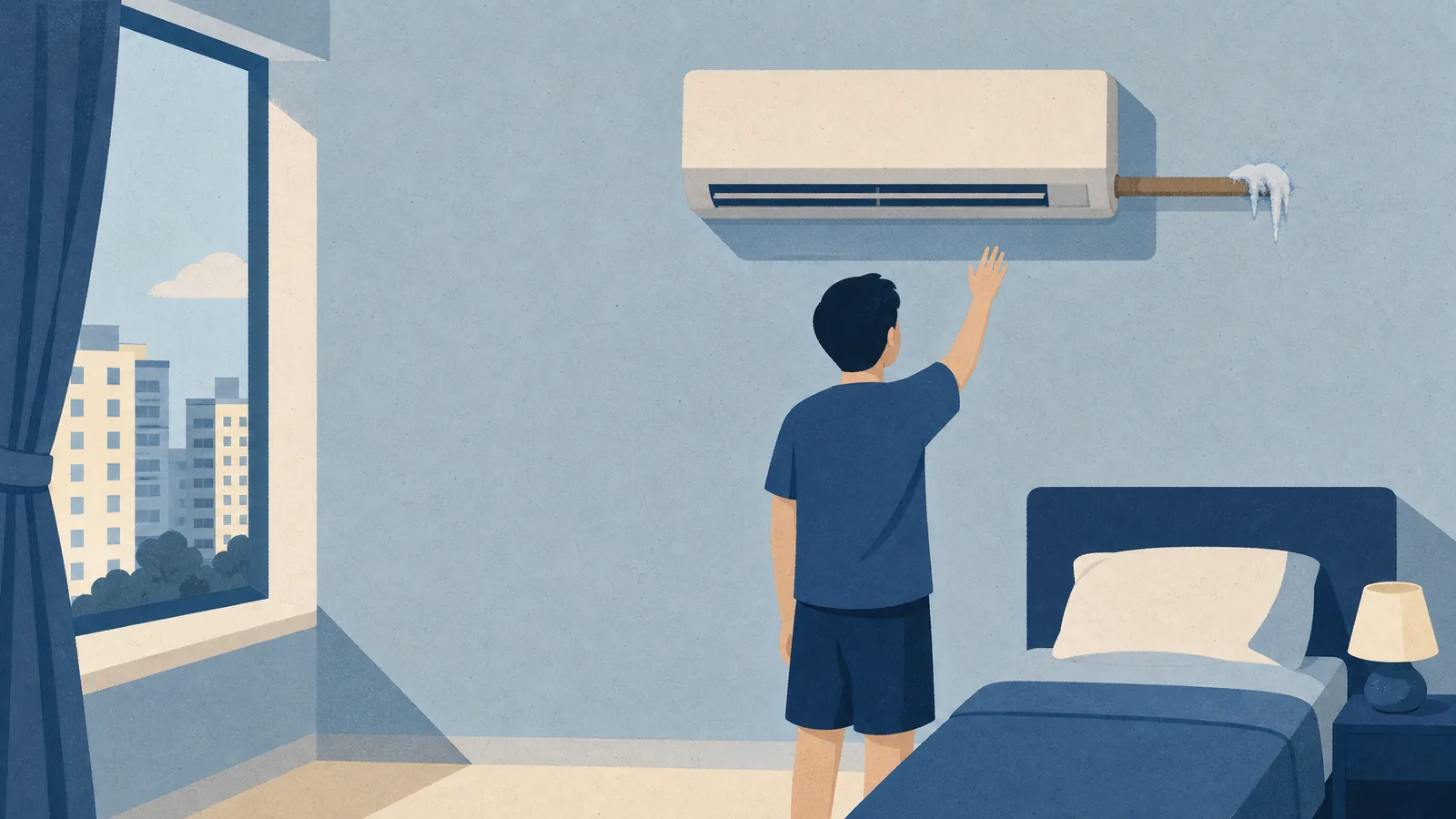
Look, but do not touch. Ice on the pipes, a hissing sound near the outdoor unit, or a faint sweet smell near the indoor unit are all signs consistent with a leak. Write down what you notice; a provider who already knows this spends the visit fixing, not asking.
Do not add refrigerant yourself, and do not let anyone top up the gas without first telling you where the leak is. A top-up into a system still leaking buys a few weeks at most.
The likely causes, in order
A loose or corroded joint (most common). The most likely cause is a slow leak at a pipe joint or flared fitting rather than a burst line. Manufacturers treat this as its own fault category: Daikin's compressor warranty explicitly excludes "Charging of refrigerant" and "Other components within the refrigerant circuit", so a technician checks the joints before assuming the compressor has failed. Safe check: none you can do yourself — this needs a pressure test, since the joints sit behind the outdoor unit's casing.
A pinhole leak in the coil. The second likely cause is a pinhole leak in the indoor coil, which corrodes slowly in humid air over years of use and shows up as cooling that fades gradually rather than stops suddenly. Safe check: note whether the unit is more than five to seven years old and has not had a chemical wash recently — both raise the odds of coil corrosion, though only a technician can confirm it.
A valve or connection that was never sealed at installation. The third and least likely cause is a valve or connection that was never sealed correctly at installation, which tends to show up as a leak within the first year rather than after years of normal use. Safe check: if the unit is under a year old and losing cooling, mention the installation date when you call — it changes who is responsible for the fix.
When to call, and how urgently
Stop and call a technician now if you smell a sweet or chemical odour near the indoor unit, hear a hissing sound when the compressor starts, or see ice forming on the pipes. Do not open the outdoor unit casing or the refrigerant lines yourself; refrigerant work is never a DIY step.
Short of those signs, a gas leak is not an emergency the way a burst pipe is — the unit loses a little cooling each day rather than fails outright — but leaving it un-diagnosed means the compressor runs on too little refrigerant, which eventually damages it. Book a repair-diagnosis visit within the week rather than wait for the unit to stop cooling altogether.
What it costs
A diagnosis visit is one cost; locating and repairing the leak, plus the refrigerant recharge, is quoted separately once the fault is confirmed.
Ask what the diagnosis fee covers, whether it is credited against the repair, and whether the quote separates the leak repair from the recharge. Refrigerant is priced by weight and type — R32 and older R410A are not interchangeable.
If the unit has leaked before, ask why: a joint repaired once and leaking again is a different conversation from a new leak elsewhere.
Who to call, and how to judge them
NEA mandates GHG entity registration for companies that install or maintain regulated air-conditioning equipment, requires them to employ certified technicians, and requires spent refrigerant to go to a treatment facility authorised by NEA. There is no public register a homeowner can search by company name, so ask directly whether the provider is GHG-entity registered and the technician is certified.
An ACRA registration confirms the business exists, nothing more. Prefer a provider who explains where the leak is before quoting a recharge, over one who quotes a top-up sight unseen. On arrival, an aircon servicing provider pressure-tests the refrigerant circuit to find where gas is escaping, rather than assuming the compressor has failed outright, then repairs or replaces the leaking joint or component before recharging.
Frequently asked questions
What does it mean if my aircon has a gas leak?
An aircon gas leak means refrigerant has escaped from the sealed circuit that links the indoor and outdoor units. NEA notes that hydrofluorocarbon refrigerants have high Global Warming Potential and that spent refrigerant vented to the atmosphere causes emissions, which is why any leak is a regulated loss of gas, not just a cooling problem.
Why does my aircon lose cooling slowly instead of all at once?
The most likely cause is a slow leak at a pipe joint or flared fitting rather than a burst line. Manufacturers treat this as its own fault category: Daikin's compressor warranty explicitly excludes "Charging of refrigerant" and "Other components within the refrigerant circuit", so a technician checks the joints before assuming the compressor itself has failed.
Sources
- NEA, "Reducing GHG Emissions from the Use of Refrigerants in the RAC Sector" (fetched 15 Sep 2026)
- Daikin Singapore, "Air Conditioner Warranty" (fetched 15 Sep 2026)
- NEA, "About Mandatory Energy Labelling and Minimum Energy Performance Standards" (fetched 15 Sep 2026)
Compare aircon servicing providers and ask each one the same question before you book: where do you think the leak is, and how will you confirm it before you recharge?