What to check first
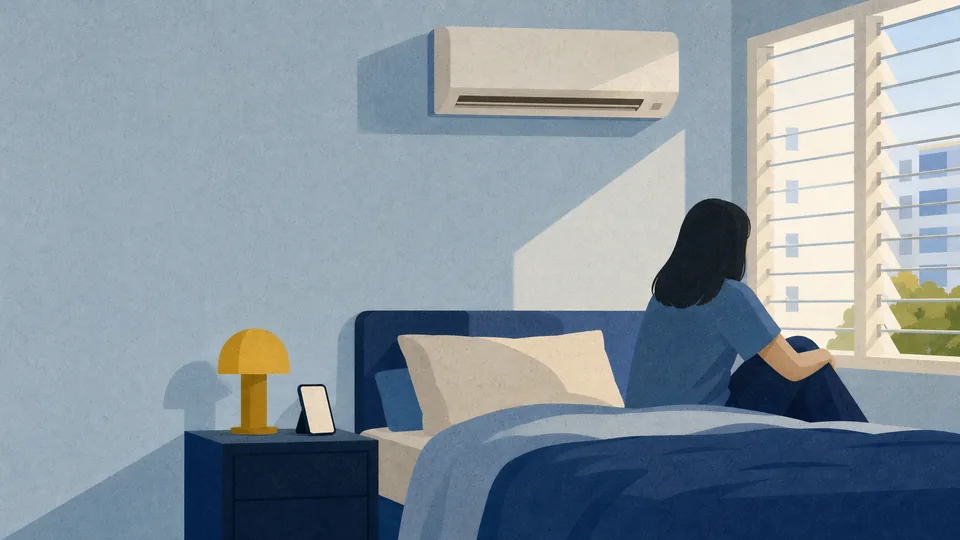
Start with the remote. Is the unit in cooling mode, and is the set temperature actually below the room temperature? This sounds obvious, but it accounts for a real share of "not cold" calls and costs nothing to check.
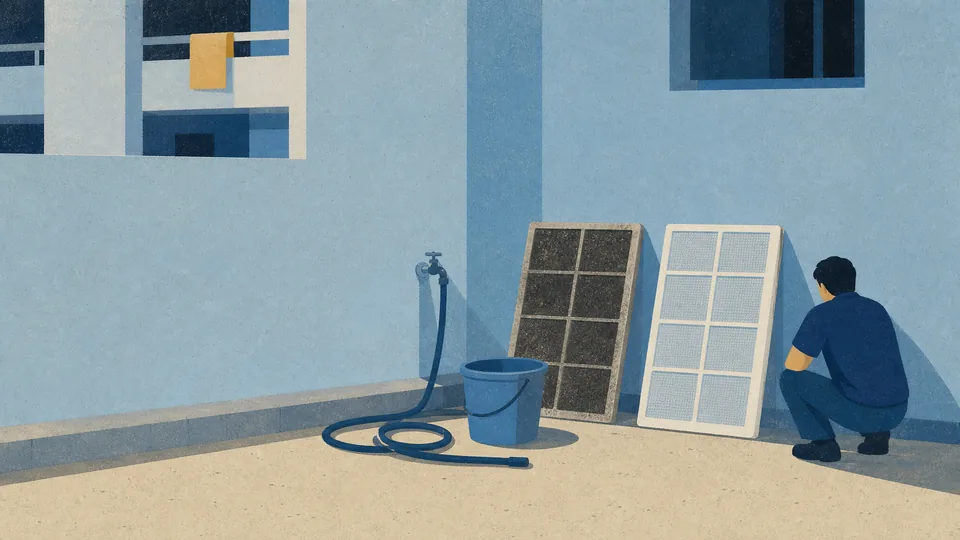
Next, look at the filter if you can reach it safely standing on the floor. Switch the unit off first. A filter grey with dust, or a coil you can see is caked, points straight at the most likely cause below.
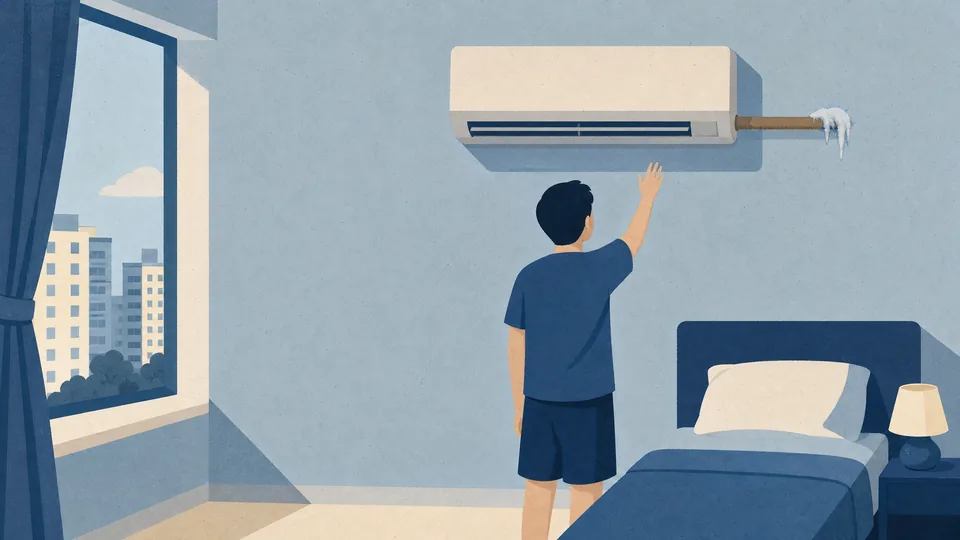
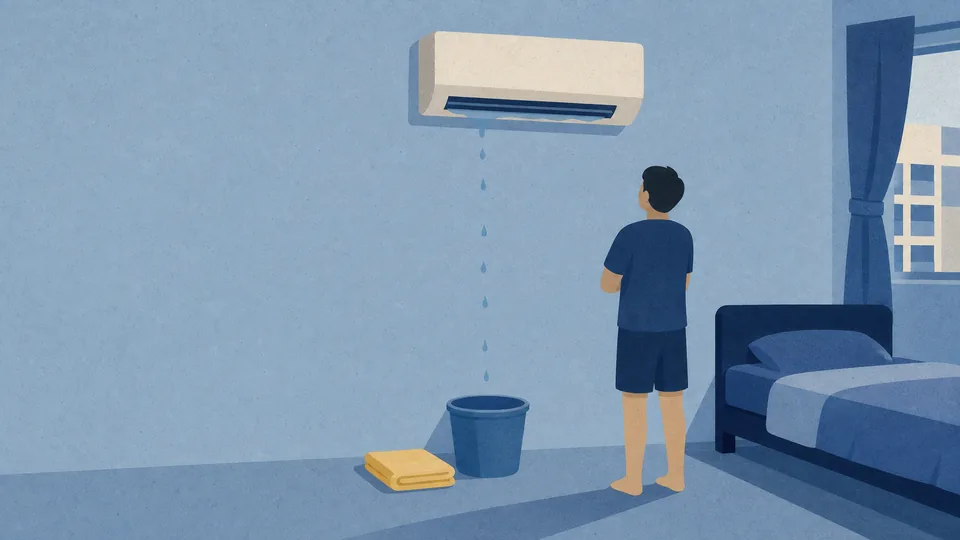
Note whether the fault affects one indoor unit or the whole system, whether there is any ice on the pipes or the indoor coil, and whether you hear an error code beep or see one on the display. These details, written down before you call, tell a technician which of the five causes to check first.
The five causes, in likelihood order
A dirty filter or coil choking the airflow (most likely). The most likely cause is a dirty filter or coil choking the airflow — this is also the cheapest to check and the one most often solved by a general service rather than a repair. Safe check: switch the unit off, slide the filter out if you can reach it standing on the floor, and look for grey dust buildup. If it has not been cleaned in the last month, this is very likely the answer.
The unit was never actually set to cool. A small share of calls turn out to be the remote showing the wrong mode or a temperature set at or above room temperature. Safe check: read the remote display only; no need to touch the unit itself.
A refrigerant leak. The second most likely cause is a refrigerant leak, which shows as cooling that faded over weeks rather than stopped suddenly, or ice on the pipes or indoor coil. A leak needs to be found and repaired, not just topped up, since "Charging of refrigerant" sits outside what Daikin's compressor warranty covers as routine service. Safe check: note when the fading started; nothing beyond that is safe to check yourself.
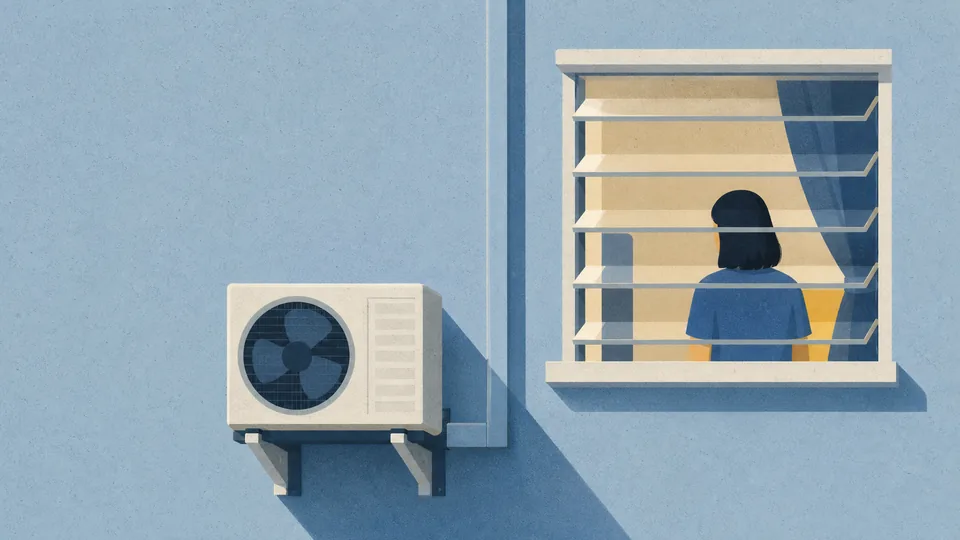
A compressor fault. Less common than a leak, but more serious, is a compressor fault, shown by the outdoor unit running silent or clicking while the indoor fan still blows — the most expensive of the five causes and the one a technician should confirm last, not first. Safe check: listen from a safe position; do not open the outdoor casing.
An electrical or control fault. The least common of the five, but shown by an error code on the display or the unit stopping and restarting by itself. Safe check: note the error code if there is one; never open electrical panels yourself.
When to call, and how urgently
Never DIY an electrical fault, and never open the outdoor unit's casing yourself even for a suspected refrigerant leak. If there is an error code, a burning smell or repeated cutting out, switch the unit off and call a technician rather than keep testing it.
If the cause is the filter or the remote setting, there is no urgency once you have checked and fixed it yourself. If it is a leak, a compressor fault or an electrical fault, book within the week — cooling loss that goes undiagnosed tends to get worse, not better, as the underlying fault continues.
What it costs
The remaining repair, whatever the cause turns out to be, is quoted separately. A filter clean costs nothing beyond the visit; a compressor replacement can run to several hundred dollars in parts and labour.
Give the provider everything you noted before they arrive: mode and temperature setting, filter condition, ice or no ice, error code, and whether one unit or the whole system is affected.
Before you agree to book, ask: is there a call-out fee if you decline the repair; does the price cover one unit or the whole system; will they show you the fault before extra work; and are parts, labour and GST included.
Who to call, and how to judge them
NEA requires suppliers to register regulated goods before supplying them and mandates GHG entity registration for companies performing maintenance and installation work, with certified technicians carrying out the job. There is no public register a homeowner can search by company name, so ask the provider directly.
An ACRA registration confirms the business exists, nothing more. Prefer a provider who checks the causes in order, cheapest first, over one who jumps straight to quoting a compressor replacement. A technician who is doing this properly checks the mode and temperature setting, then the filter and coil, then the refrigerant charge, then the electrical components, and only then confirms a compressor fault — the same order the causes are ranked in.
Frequently asked questions
What are the most common reasons an aircon stops cooling?
Aircon that is not cold usually comes down to one of five causes, listed here roughly from most to least likely: a dirty filter or coil, a wrong remote setting, a refrigerant leak, a compressor fault, and an electrical or control fault.
What is the single most likely cause?
A dirty filter or coil choking the airflow is the most common cause — and the cheapest to check.
Sources
- Daikin Singapore, "Air Conditioner Warranty" (fetched 15 Sep 2026)
- NEA, "Reducing GHG Emissions from the Use of Refrigerants in the RAC Sector" (fetched 15 Sep 2026)
- NEA, "About Mandatory Energy Labelling and Minimum Energy Performance Standards" (fetched 15 Sep 2026)
Compare aircon servicing providers and describe which of the five causes matches what you see before you book.