What to check first
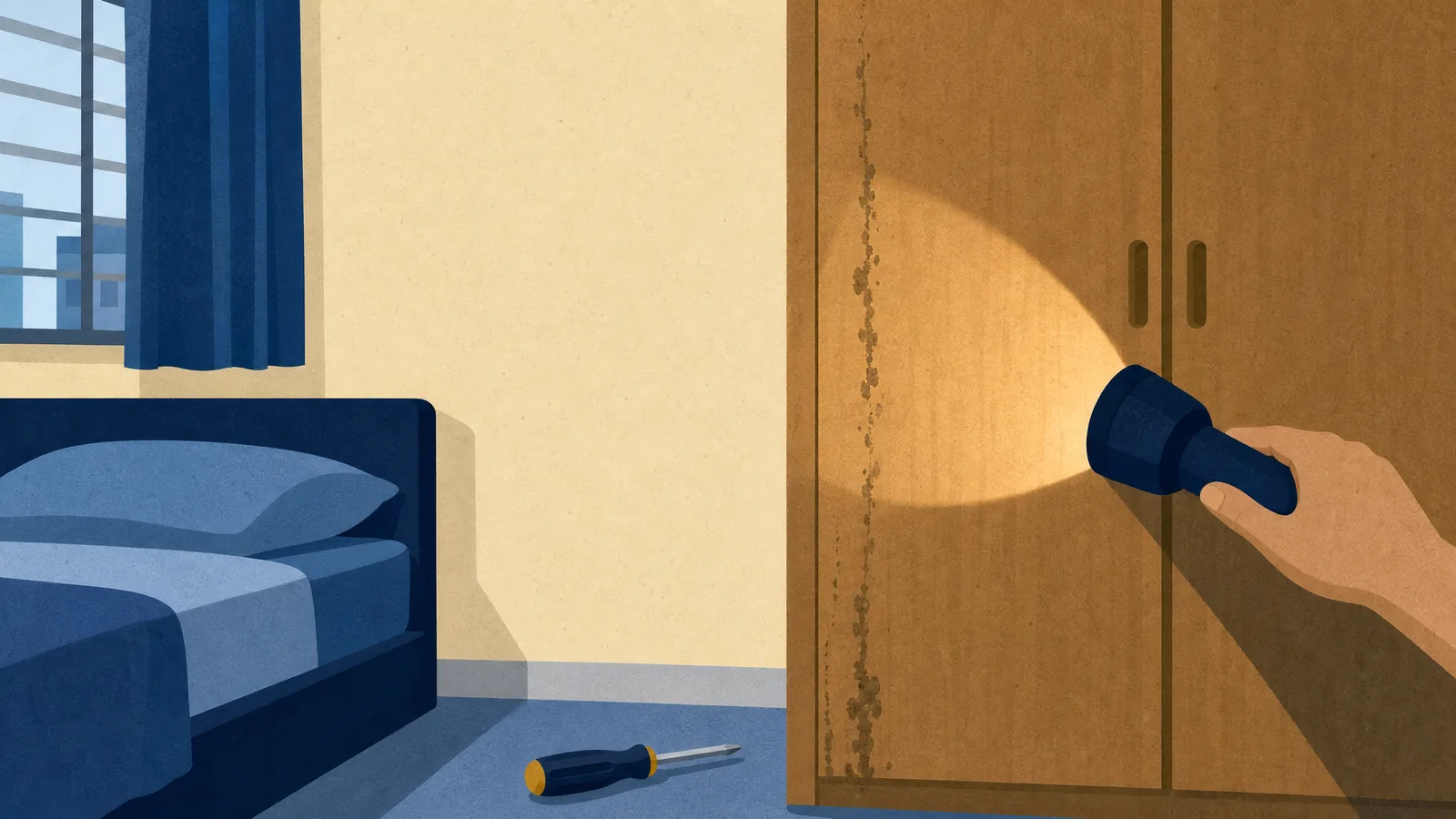
Before booking, photograph any mud tubes, damaged wood or discarded wings you find, note where in the flat you found them, and check that the operator you are calling appears on NEA's registered VCO list.
Tap or press suspect timber (skirting, door frames, built-in furniture) gently. Wood that sounds hollow or gives slightly under light pressure has likely been hollowed out from the inside, which is a stronger sign than surface marks alone.
Check nearby for a moisture source: a leaking pipe, a damp store room, or wood in contact with soil or a planter box. Termites need moisture, and the source is often what an inspection is really looking for.
The likely causes, in order
An untreated root cause, such as moisture (most common). An untreated root cause, such as moisture or wood-soil contact near the flat, is the most common reason termite activity continues after a visible sign is dealt with. Singapore Standard 721:2025 for pest management is built on prevention first: emphasis on eliminating root causes of infestations rather than treating symptoms. The standard names termites specifically among the pests it covers, alongside rats, cockroaches, mosquitoes, fleas, flies, biting midges and bedbugs.
Treating the visible damage without finding the colony (second). Treating the visible damage without finding the colony is the second cause of a problem that returns. SS 721:2025 describes the industry shift as moving from reactive chemical treatments to proactive, science-based approaches — spraying a visible mud tube kills what is in it, not the colony feeding it.
When to call, and who
Only NEA-registered Vector Control Operators may be engaged for termite treatment. Members of the public are advised to ensure that vector control services, regardless of the type of service provider, are procured from licensed Vector Control Operators, and a list of registered VCOs is available for download from NEA.
Call a pest control operator as soon as you find mud tubes, hollow-sounding timber or discarded wings — termite damage compounds the longer it runs, unlike a cockroach sighting, which is why an inspection sooner rather than later matters more here.
A proper termite job follows an inspection and evaluation, not just a spray. SS 721:2025 requires operators to combine physical, biological and chemical controls as appropriate and to use objective evaluation to guide intervention decisions, with regular evaluation to ensure long-term effectiveness. Ask whether that is what is being quoted, or just a one-off chemical application.
What it costs
Ask two or three for a written quote instead.
Give each operator the same description: what you found (mud tubes, damaged wood, discarded wings), where, and whether the affected area is furniture, flooring or a structural timber. A quote for "termite treatment" with no inspection first is a guess at the scope, and termite jobs vary far more than most pest jobs by extent.
Ask whether the price includes an inspection and a written report before treatment, what the treatment method is, and whether there is a warranty period on the treatment if termites return in the same spot.
Who to call, and how to judge them
The NEA match is the one that confirms the operator is licensed for vector control work; ACRA only confirms the business exists.
Prefer an operator who inspects and gives a written report before quoting treatment, over one who quotes a flat termite treatment fee over the phone with no inspection.
Frequently asked questions
Is termite damage in my flat a structural problem?
A termite infestation in Singapore is a structural risk, not just a pest sighting: the visible damage (hollow-sounding wood, mud tubes along a wall) is evidence of a colony you cannot see, and treating the visible sign alone rarely reaches it.
Why does a termite problem come back after treatment?
An untreated root cause, such as moisture or wood-soil contact near the flat, is the most common reason termite activity continues after a visible sign is dealt with. Singapore Standard 721:2025 for pest management is built on prevention first: emphasis on eliminating root causes of infestations rather than treating symptoms.
Sources
- NEA, "Background on Singapore Standard 721:2025" (fetched 15 Sep 2026)
- NEA, "Vector Control Operator, Vector Control Technician and Vector Control Worker" (fetched 15 Sep 2026)
- SPMA (Singapore Pest Management Association) homepage (fetched 15 Sep 2026)
Compare pest control providers and give each the same three answers: what you found, where, and whether an inspection comes before treatment.